

Track Your Progress
A compact list of your check-ins on Home — your latest score, the shape of the trend, and one tap to take the next one.
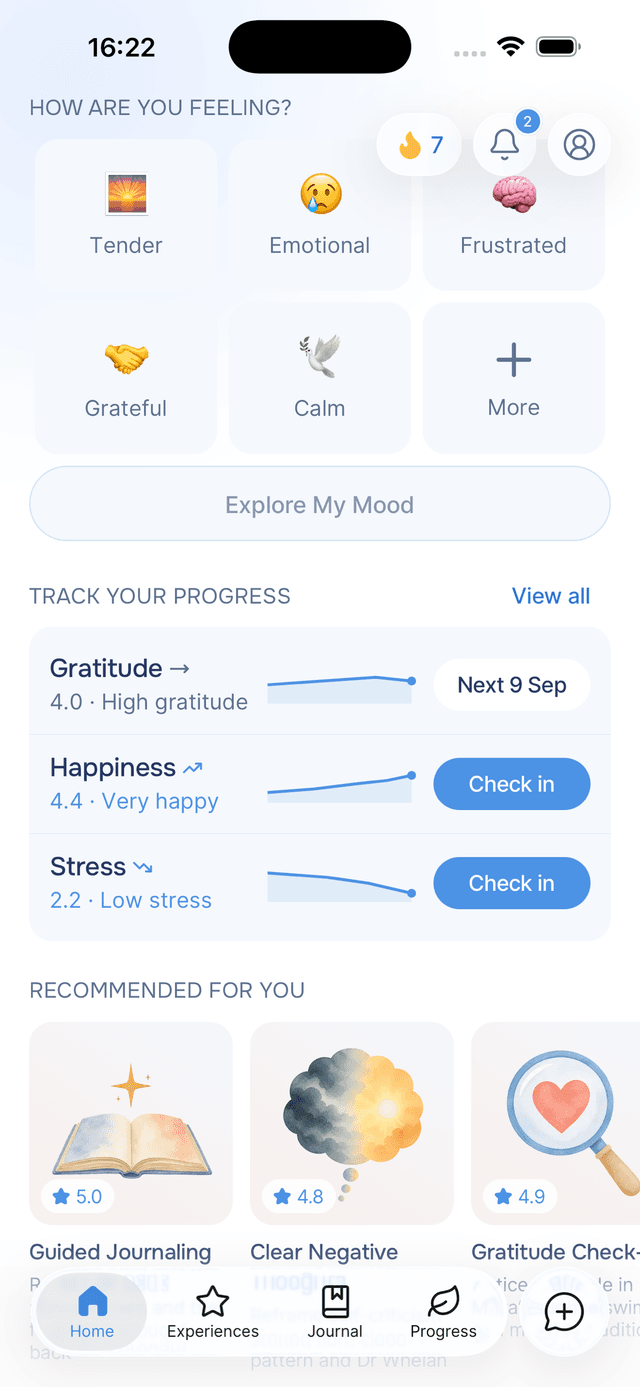
Home keeps your check-ins on the screen you already visit. Under the Track your progress heading sits a single card with one row per check-in, Each row shows where you are, which way you are going, and the one thing you can do about it now.
Reading a Row
From left to right:
- The name — Happiness, Stress or Gratitude, with a small arrow when there is a trend to show. Blue means the move is good news, so stress falling and gratitude rising both read blue.
- Your latest score and what it means, as
3.1 · Moderate. A check-in you have never taken saysNo record yet. - A sparkline of every score you have recorded, so the shape of the last year is readable without opening anything.
- One action. Start if you have never taken it, Check in when one is ready, or a quiet Next tag with the date the next one is due. The tag is tappable too, so nothing stops you going in early.
Tap the row itself, rather than the button, to open that check-in's own page with the full chart, what the scale measures, and every take you have made.
Your First Time
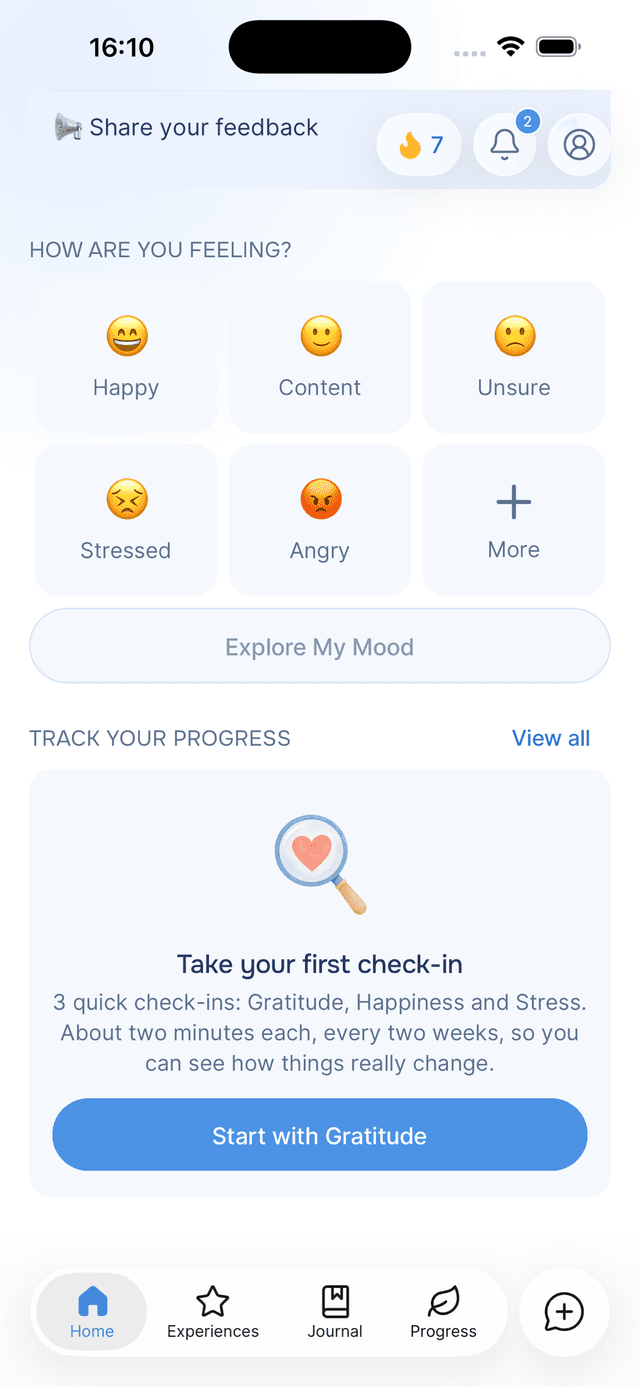
Three rows that all say No record yet would be an empty room, so before your first check-in the section shows a single card instead. It names the three check-ins, tells you they take about two minutes each and come round every two weeks, and offers one way in. The working rows appear on their own once you have taken one.
The Section Moves When Something Is Open
Most of the time this section sits below Recommended for You, out of the way. When a check-in is ready it moves up, directly under the mood check-in, so the thing you can act on today is near the top. Nothing else about it changes.
Seeing Everything
Tap View all beside the heading to open the Progress tab, where each check-in gets a full card with a proper chart, alongside your streak and garden.
Tips
- A closed check-in is still worth a tap — its page has the chart, the past takes and your individual answers.
- Gaps in the line are real gaps — points sit where you took each check-in, not evenly spaced.