

Clear Negative Thoughts
Reflect on situations, emotions, and thoughts. Reframe negativity into self-compassion.

Overview
Clear Negative Thoughts is a structured experience based on cognitive behavioral therapy (CBT) techniques. It guides you through identifying a challenging situation, recognizing the emotions and thoughts tied to it, and reframing those thoughts with self-compassion and a more balanced perspective.
- Category: Emotional Wellbeing
- Duration: 10–20 minutes
- Repeatable: Yes — use this whenever you notice unhelpful thought patterns
How It Works
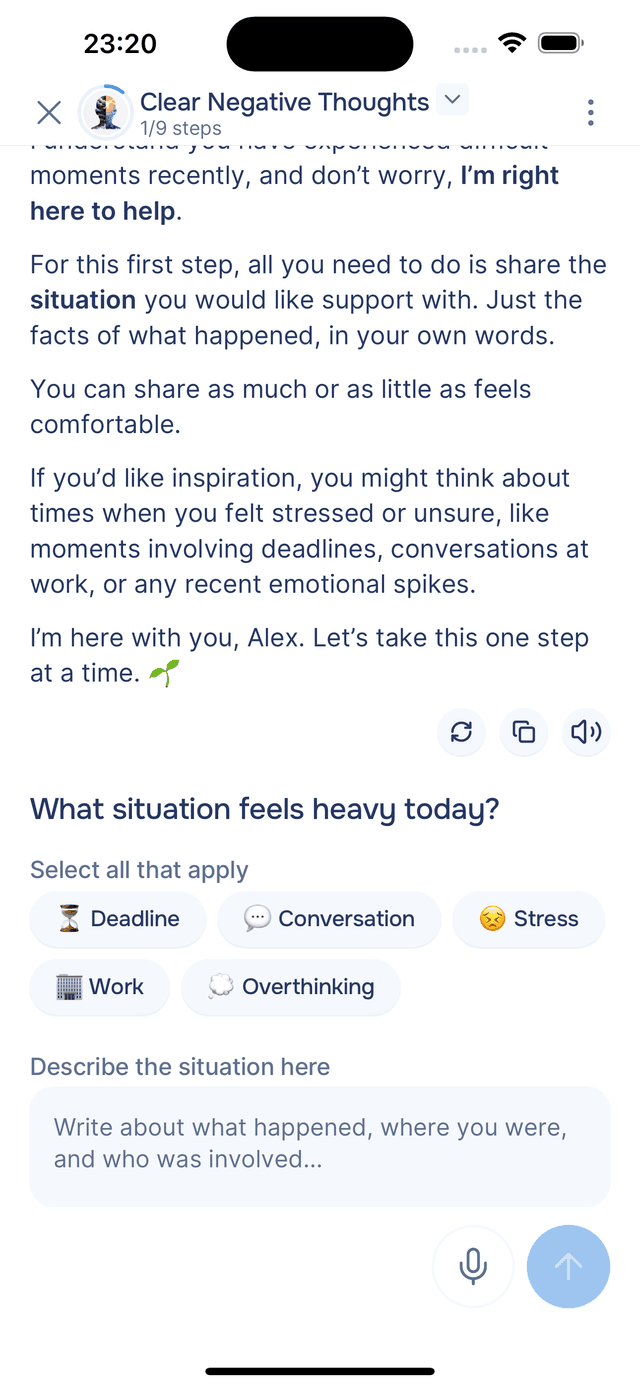
Step 1 — Situation
Your AI guide opens by inviting you to describe a situation that has been weighing on you — something that triggered difficult feelings or thoughts. You can type your response or speak it aloud.
After you share the broad strokes, the guide asks a couple of follow-up questions to help you flesh out the details: the facts of what happened, who was involved, and what made it feel significant.
This step is just about getting the situation on the table, clearly and without judgment. You are not solving anything yet — simply telling your story.
Step 2 — Emotions
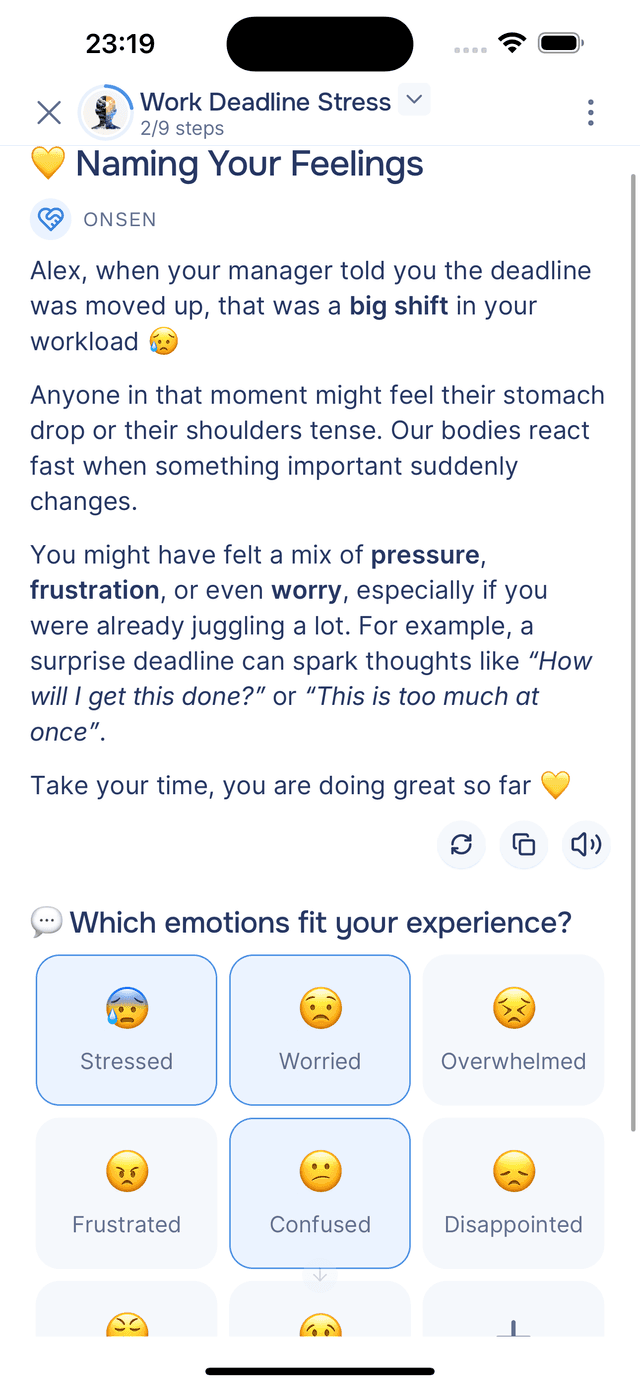
Next, the guide asks how the situation made you feel. You are presented with a set of emotion labels to choose from, and you can select as many as feel right, or add your own in your own words. Once you have made your selections, the guide reflects them back to you, naming and validating what you felt, before moving you forward with a sense of clarity about your emotional experience.
Step 3 — Thoughts
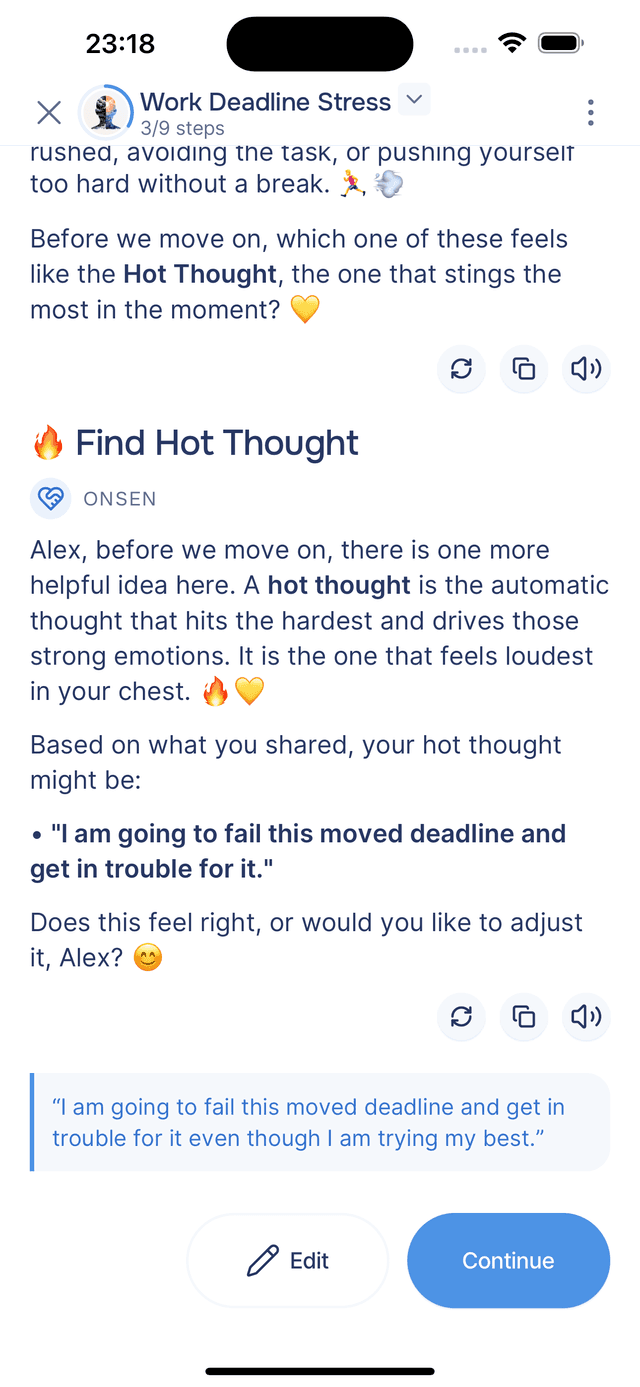
With your emotions identified, the guide invites you to look at the thoughts that ran through your mind at the time — the automatic reactions that arose before you had a chance to question them. You describe those thoughts, and then the guide helps you see how they connect to the feelings you named.
From everything you have shared, you are then asked to identify your "hot thought": the one that carries the most emotional charge and feels most central to your distress.
Step 4 — Evidence
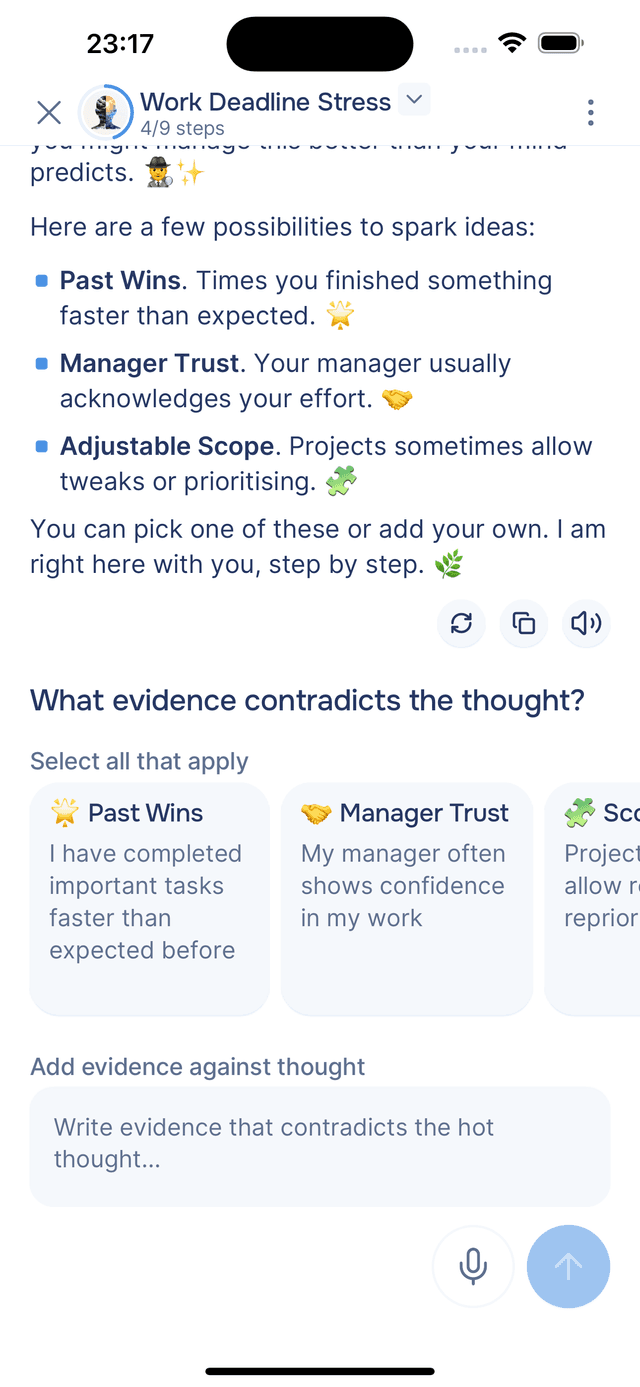
This is where the CBT work really begins. The guide first helps you notice any thinking patterns or cognitive habits — things like all-or-nothing thinking, mind-reading, or catastrophising — that may be shaping your hot thought.
Then it walks you through two sides of the ledger: evidence that supports your hot thought, and evidence that challenges or complicates it. After you have listed both sides, the guide helps you step back and consider what a more balanced interpretation might look like.
Step 5 — Reflection
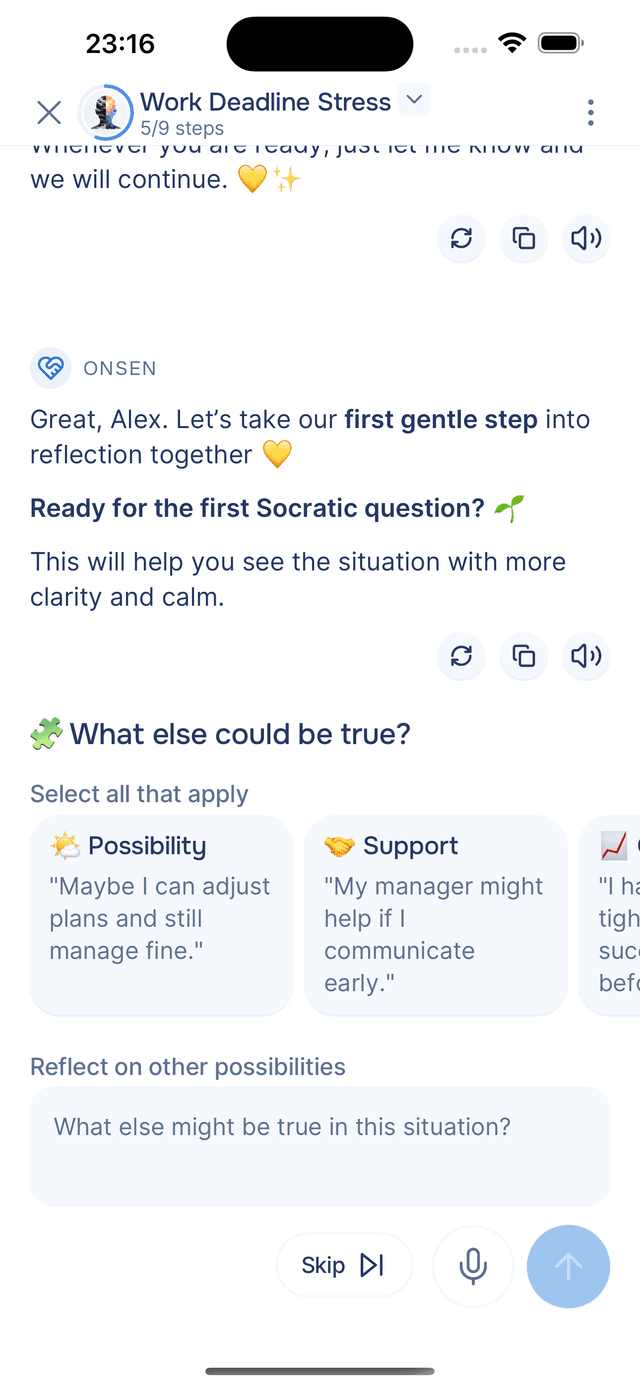
The guide shifts into a more open, exploratory mode, asking a series of thoughtful questions to help you see the situation from new angles — considering motives, alternative explanations, and what you might think about this in the future. You can answer, speak, or skip any question that does not feel relevant.
After the first few questions the guide checks in to ask whether you would like to continue exploring or move on. You can keep going as long as feels useful, or wrap up whenever you are ready.
Step 6 — Compassion
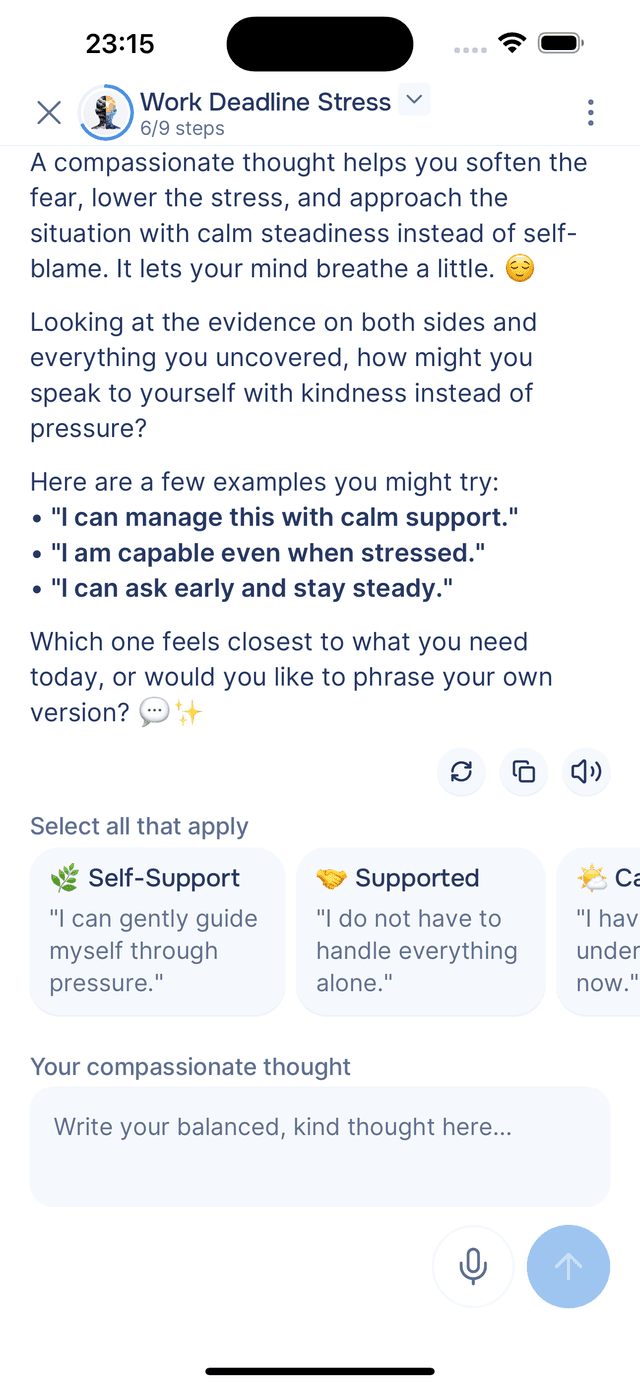
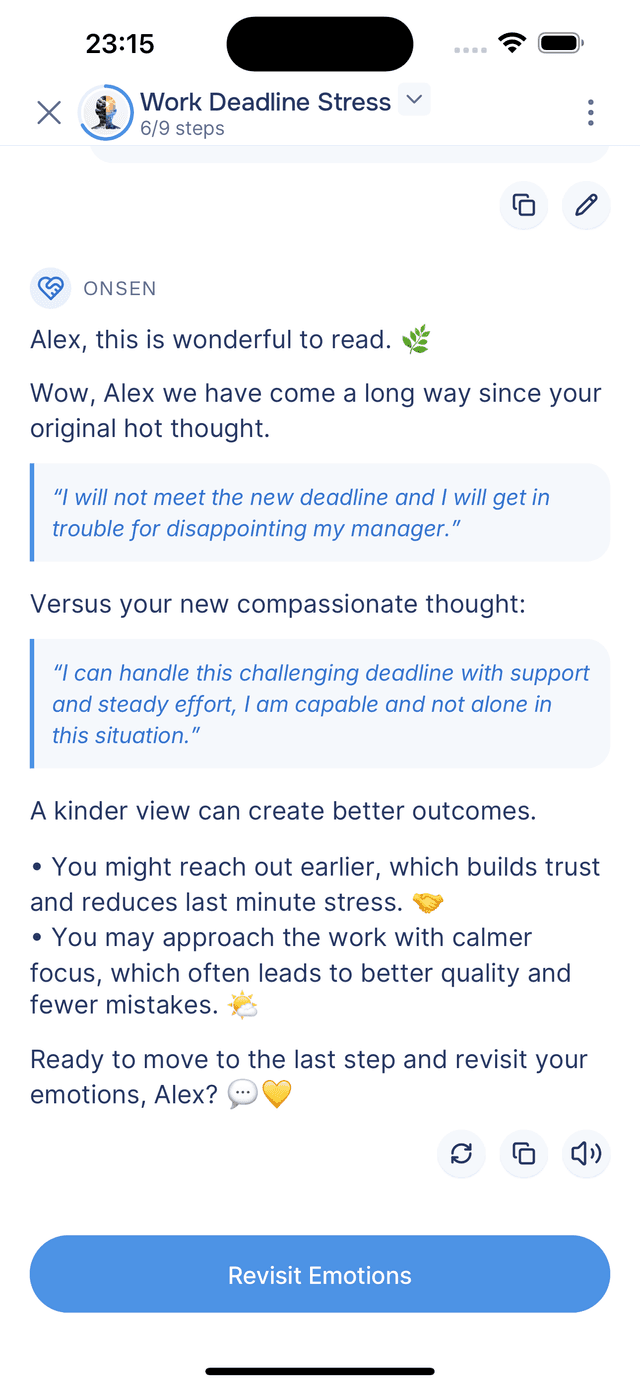
Having examined the situation from multiple sides, you are invited to rewrite your hot thought in a kinder, more self-compassionate way. This is not about forcing positivity — it is about responding to yourself the way you would respond to a friend in the same situation.
You can type or speak your revised thought, and the guide acknowledges the shift you have made, reflecting back the difference between where you started and where you are now.
Step 7 — Emotions Revisited
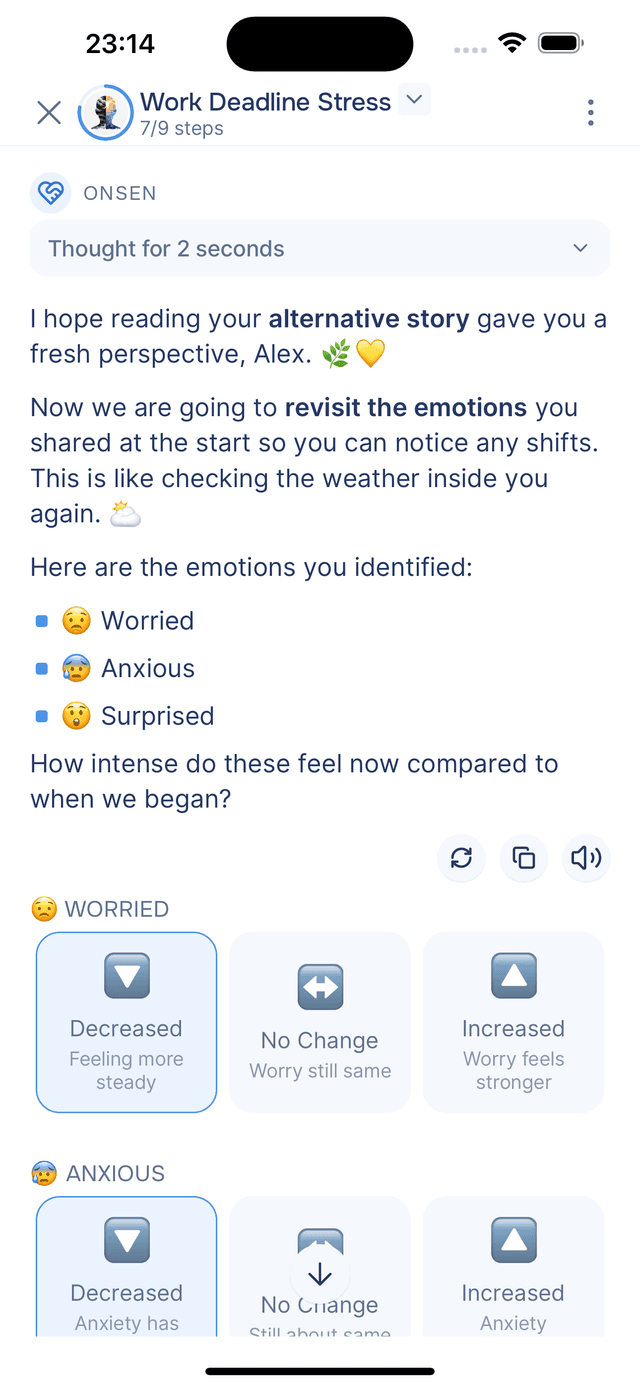
The guide presents the situation one more time, now through the lens of everything you have worked through. You are asked to re-rate the emotions you selected in Step 2, reflecting any changes in their intensity. The guide then interprets what shifted, helping you notice and appreciate the progress you made — even if the change feels small.
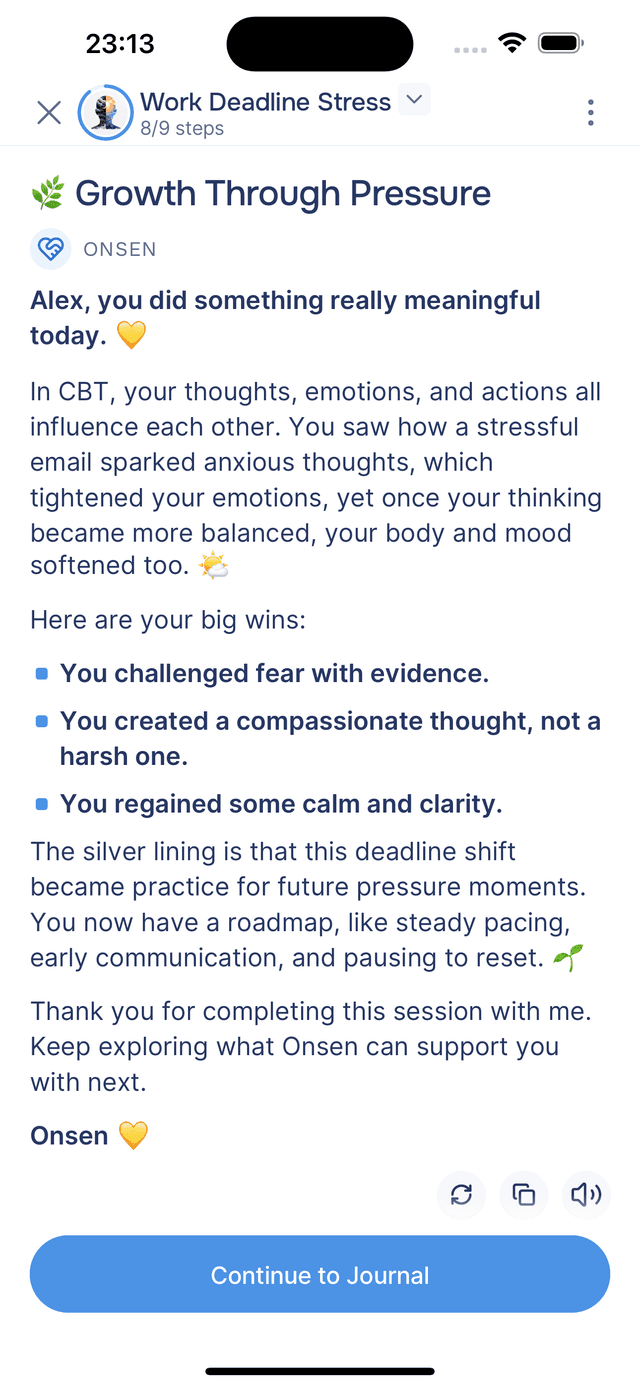
Step 8 — Lessons
The guide offers a personalized summary of the key insights and lessons from your experience. This is not a generic recap — it draws directly from what you shared throughout, highlighting what you learned about yourself, your thought patterns, and the situation. It is worth reading slowly.
Step 9 — Journal
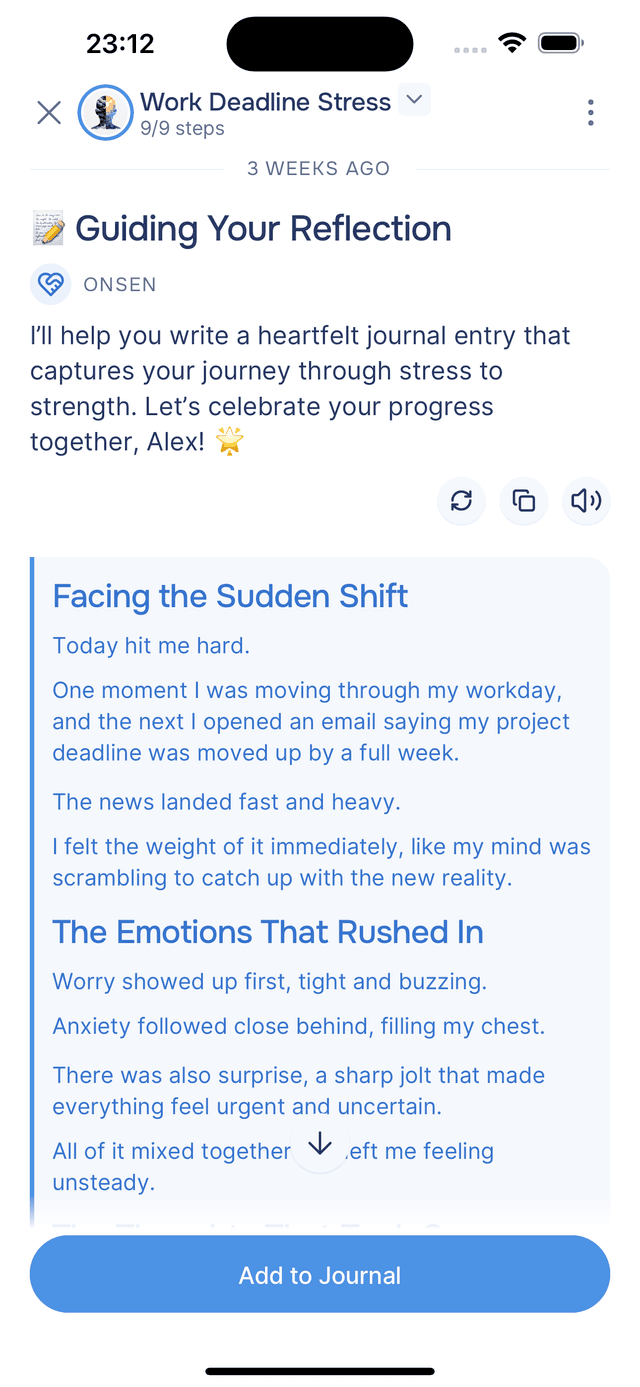
Finally, the guide transforms everything from your experience into a first-person journal entry, written in your voice and telling the story of what you went through and how your perspective shifted.
You can review and edit it before saving. When you are happy with it, tap Add to Journal — and the entry is saved to your journal for you to revisit any time.
Tips
- Be honest — there is no judgment here. The more openly you describe your thoughts and feelings, the more effective the reframing process becomes.
- Use it when patterns repeat — this experience is especially helpful when you notice the same negative thoughts coming back, helping you break the cycle over time.
- Reframing is not toxic positivity — it is about being fair and balanced with yourself, the way you would be with a friend.
- The hot thought matters — take your time picking it in Step 3. The more accurately it captures your core distress, the more useful the evidence and reframing steps will be.