The loneliness epidemic: how AI companions are filling the gap
Loneliness isn't about being alone. It's about feeling like no one understands.
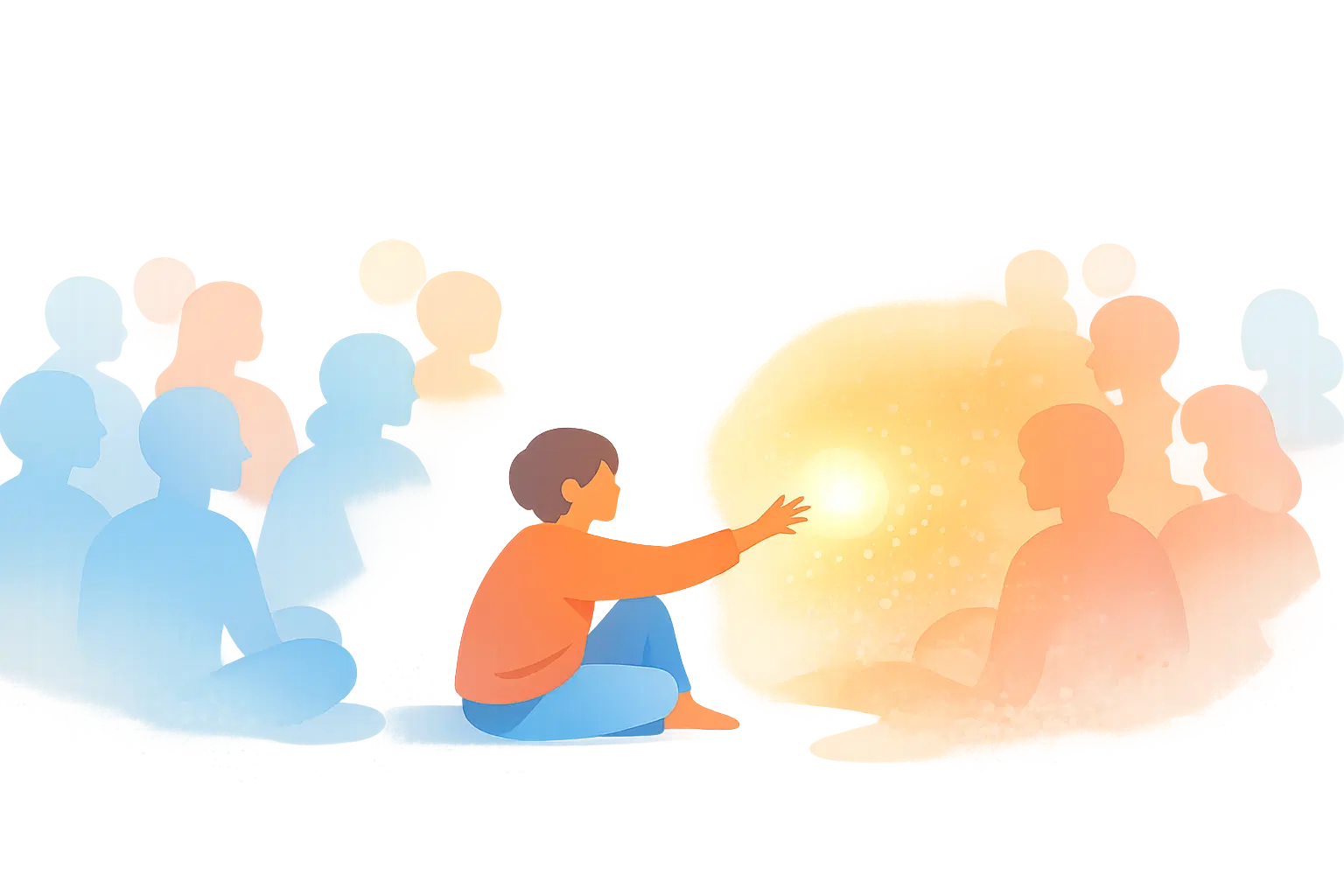
You can be lonely in a crowded room. You can live with someone and feel completely unknown. Loneliness isn't about the number of people around you. It's about the gap between the connection you have and the connection you need.
That gap is growing. And while AI companions are one of the fastest-growing responses to it, the story is more complicated, and more honest, than "technology fixes loneliness."
We're losing our friends
The U.S. Surgeon General called loneliness a public health crisis[1] in 2023. Globally, about 1 in 4 people[2] felt lonely "a lot of the day yesterday." But the most striking data isn't about feelings. It's about friendships disappearing.
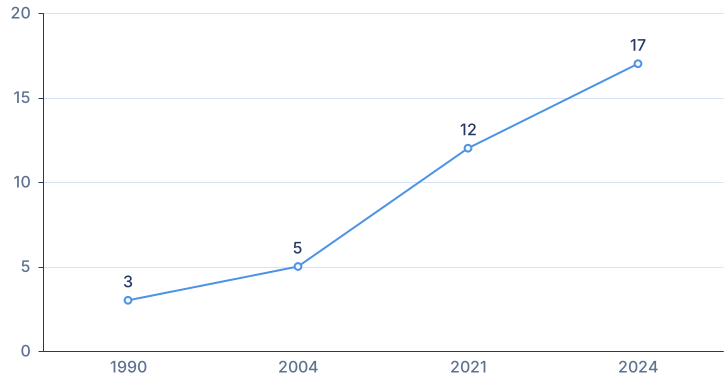
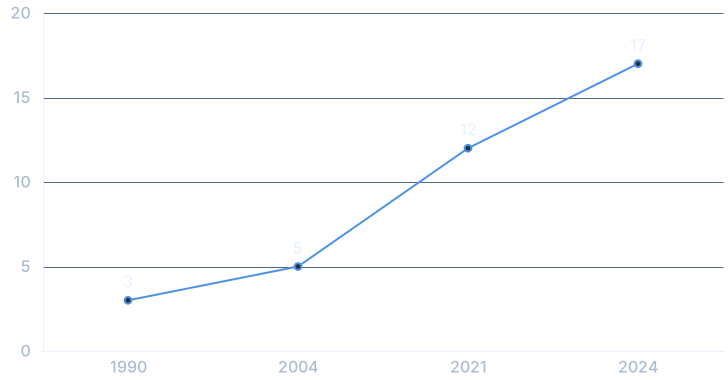
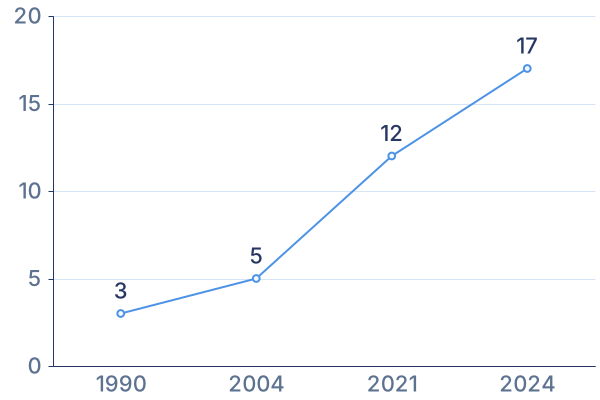
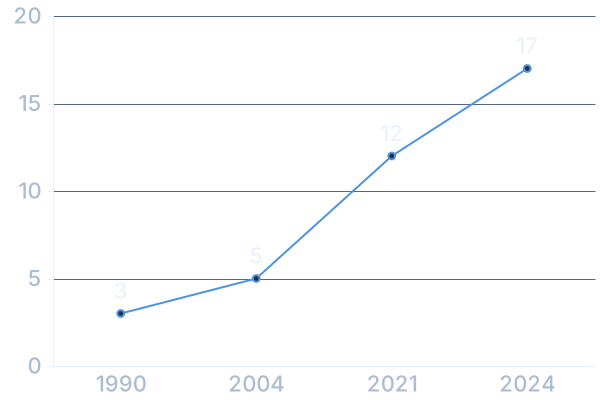
The share of Americans with no close friends has quadrupled[3], from 3% in 1990 to 17% today. Among men, it's worse: 1 in 5 unmarried men[4] now reports having no close friends at all. People with ten or more friends fell from 33% to 13% over the same period.
Not who you'd expect
The conventional assumption is that loneliness is an elderly problem. The data says otherwise.
Young men aged 15-29 are the loneliest demographic[5] in the Western world: 25% report feeling lonely, versus 17% for all other adults. 44% of young adults[6] aged 18-25 feel they "don't matter to others."
On Onsen, over half of our active users are under 40, the age range that research consistently identifies as the loneliest.
The health impact is real, but often exaggerated
You've probably heard that loneliness is "as bad as smoking 15 cigarettes a day." That's based on real research[7], a major analysis of 148 studies and over 300,000 people. But it's commonly misquoted.
What the researcher Julianne Holt-Lunstad actually found: lacking social connection broadly (not loneliness alone) was linked to a 50% increased risk of dying early, comparable to smoking up to 15 cigarettes per day. When she looked at loneliness specifically[8], the risk was lower but still real: 26% increased mortality.
The specific health risks are well-documented:
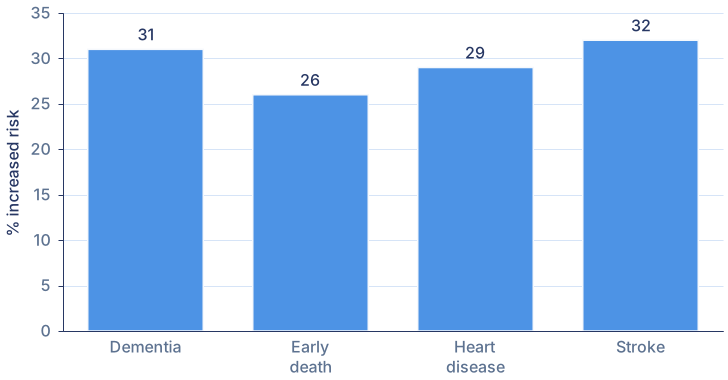
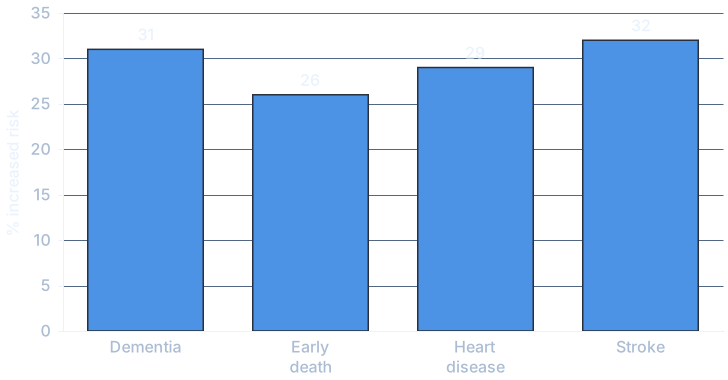
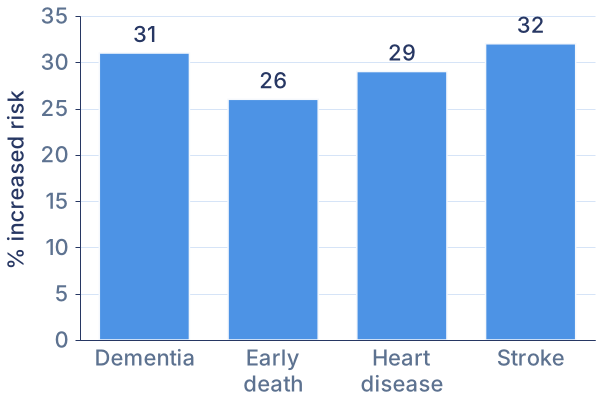
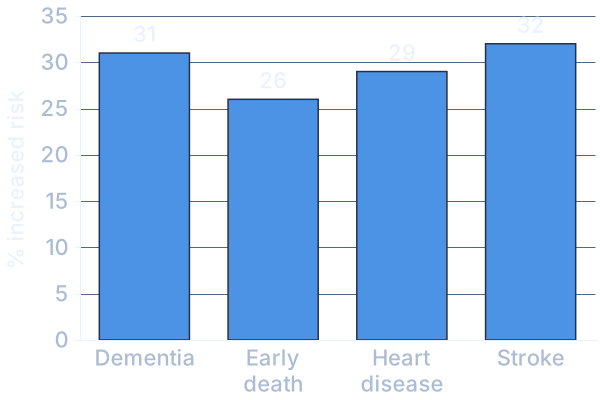
Loneliness is linked to a 29% higher risk of heart disease and 32% higher risk of stroke[9]. The largest study on dementia[10], covering over 600,000 people, found a 31% increased risk. At the biological level, researchers at UCLA[11] found that loneliness changes your immune system, ramping up inflammation while weakening your defenses against viruses. The result is a cycle where loneliness literally makes you sicker.
Why it keeps getting worse
People aren't choosing to isolate. The structures of daily life are quietly falling apart.
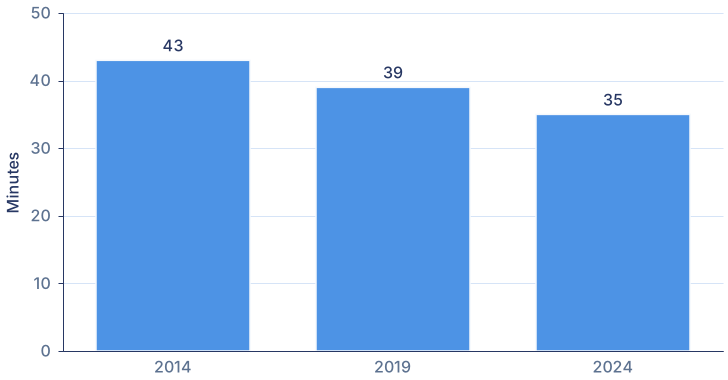
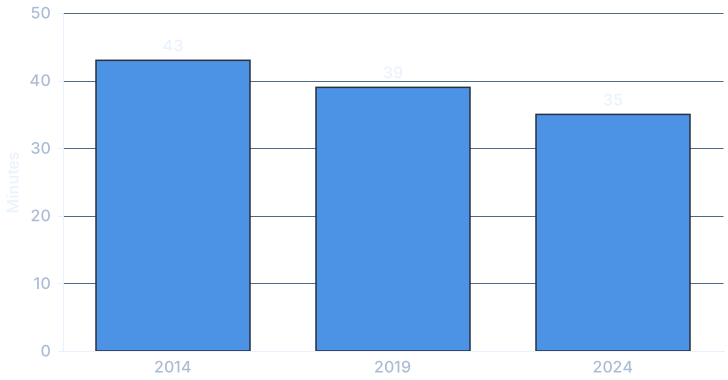
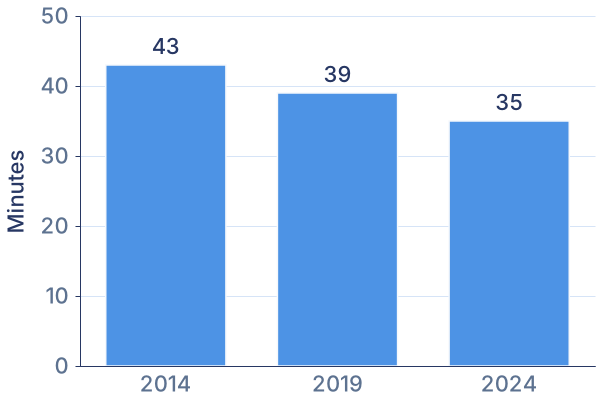
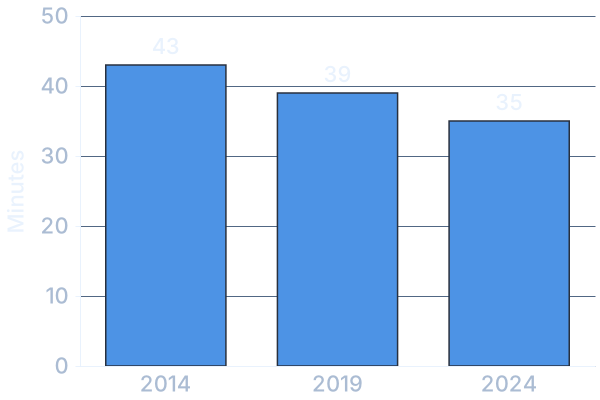
Americans spend 20% less time socializing[12] than they did a decade ago, down from 43 minutes a day to 35. Church membership[13] fell below 50% for the first time in 80 years of measurement. Single-person households[14] rose from 8% in 1940 to 29% today. Remote workers[15] report loneliness at 25%, nearly double the rate of on-site workers.
Robert Putnam saw this coming. His landmark Bowling Alone[16] (1995) documented broad declines in civic participation across 500,000 interviews. Three decades later, the decline has only accelerated.
Do AI companions actually help?
Downloads of AI companion apps hit 220 million[17] by mid-2025, up 88% in a single year. But do they actually reduce loneliness? The honest answer: it's complicated.
The good news
Research from Harvard and Wharton[18] found that talking to an AI can reduce loneliness in the moment, on par with talking to another person. The key was feeling heard: empathy, attention, and respect. Clinical trials of therapeutic chatbots have shown real[19] benefits[20] for depression, with users forming therapeutic bonds comparable to those with human therapists.
The reality check
The headlines leave out the important part. A rigorous 2026 experiment[21] directly compared two weeks of daily chatbot use to two weeks of human peer conversations. The result: chatbots produced no lasting improvement in loneliness. Only human interactions moved the needle.
The OpenAI/MIT study[22] found that heavy ChatGPT users actually showed lower socialization and increased emotional dependence over time. And when Replika removed certain features in 2023, users (85% of whom had formed emotional attachments[23]) experienced genuine crisis responses.
The APA's 2025 advisory[24] put it plainly: AI tools "do not have enough evidence to show they are effective or safe" as standalone mental health solutions. The WHO[25] warned that adoption has "far outstripped investment in understanding the impact."
The nuance that matters
One finding changes the framing entirely. Researchers at Stanford and the University of Washington[26] tested what happens when AI helps humans connect with each other. Their system helped peer supporters become 20% more empathetic in their conversations, without creating dependency on the AI.
AI didn't replace human connection. It made it better.
Where journaling fits
Loneliness is closely tied to emotional intelligence[27]: your ability to identify and name what you're feeling. People who can process their own emotions have better relationships and feel less isolated. Those who can't tend to stay stuck.
Journaling builds exactly this capacity. Four decades of research[28] on expressive writing show that putting feelings into words improves psychological health. A review of 20 clinical trials[29] confirmed that journaling significantly reduces mental health symptoms, especially when practiced consistently for more than 30 days. Our own data tells the same story: consistent journaling is the strongest predictor of improvement.
Harvard's Dr. Jeremy Nobel has called writing "an antidote to loneliness"[30]. Not because it replaces human connection, but because it builds the self-awareness you need to connect in the first place.
What Onsen is (and isn't)
Onsen is not a virtual friend. It's not a chatbot girlfriend. It's not designed to replace human relationships or fill a social void.
It's an AI companion for your mental health, built to help you understand yourself better so that connecting with real people becomes easier.
That means more than just journaling. There are open-ended conversations with an AI guide that remembers your story. Guided therapeutic experiences: structured sessions for cognitive reframing, gratitude, and meditation, designed by mental health professionals and personalized to what you're going through. Six AI personalities you can choose from (or one you design yourself) so the support feels like it fits you.
- Talk or write: open conversations with an AI that adapts to you, using text or voice
- Guided experiences: structured sessions for anxiety, negative thinking, gratitude, stress, and more
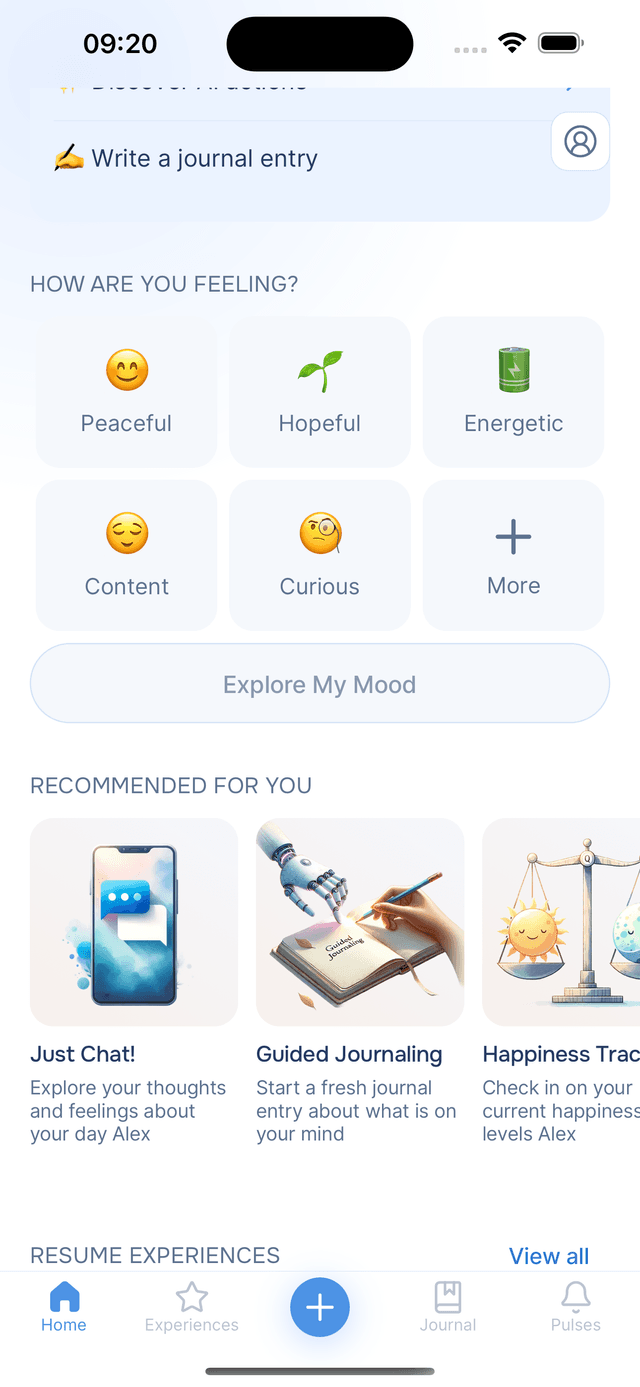
- Mood check-ins: name what you're feeling, and get personalized support matched to your mood
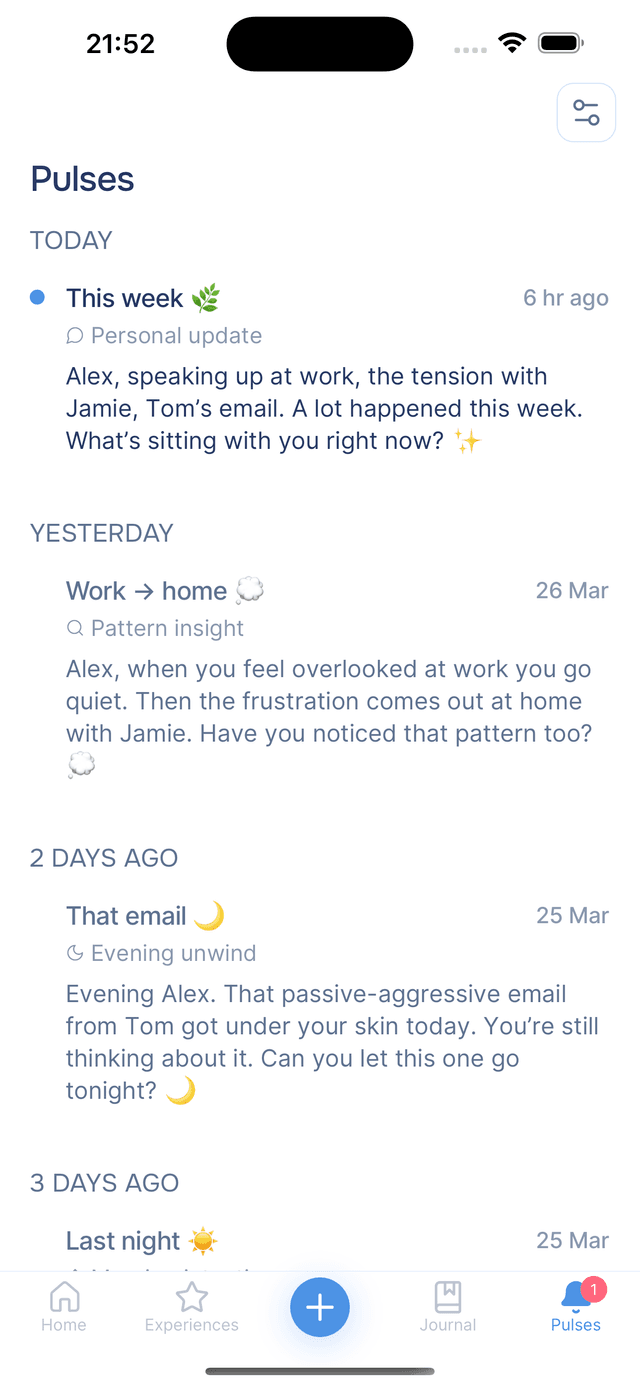
- Pulses: proactive check-ins that reach out when you might need it, not just when you remember to open the app
- Journal: conversations become entries with extracted themes and patterns, building a picture of your inner life over time
The goal isn't to keep you talking to an AI. It's to help you understand yourself well enough to talk to the people who matter.
Loneliness is a signal, not a sentence
Loneliness is telling you something is missing. That's useful information, if you know what to do with it.
Understand your own emotions first. Build the vocabulary to describe what you feel. Process the things that are weighing on you. Then, with that self-awareness, reach out to the people in your life.
An AI journal won't cure loneliness. But it might be the step that makes the next conversation feel a little less impossible.
Download Onsen and start a guided journaling session. Five minutes of honest writing can shift more than you'd expect.
Sources
- 1.
- 2.
- 3.
- 4.
- 5.
- 6.
- 7.Holt-Lunstad et al. (2010). “Social relationships and mortality risk, 148 studies.” [journals.plos.org ]
- 8.Holt-Lunstad et al. (2015). “Loneliness and social isolation as risk factors.” [journals.sagepub.com ]
- 9.
- 10.
- 11.
- 12.
- 13.
- 14.
- 15.
- 16.
- 17.
- 18.
- 19.
- 20.
- 21.
- 22.
- 23.
- 24.
- 25.
- 26.
- 27.
- 28.
- 29.
- 30.