How to tell if you're burned out (and what to do about it)
Tired of being tired? It might be more than that.
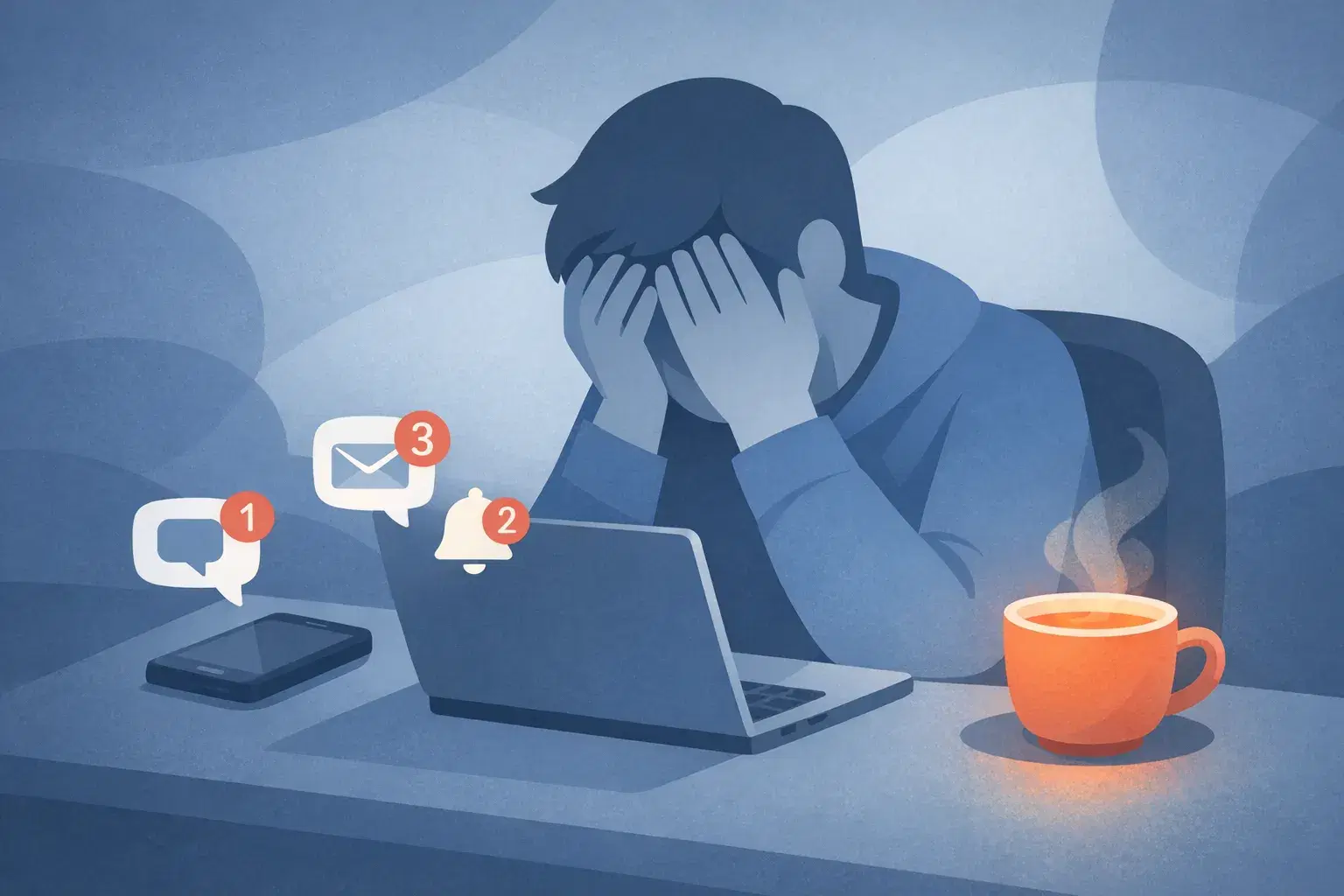
You used to care about your work. You used to have energy for your friends, your hobbies, your life. Now you're running on fumes and pretending everything's fine.
You're not lazy. You're not ungrateful. You might be burned out.
67% of workers reported burnout symptoms in the past month alone.[1] And the problem got worse after COVID: physician burnout hit 62.8% in 2021,[2] and global employee engagement just dropped to its lowest point in years.[3]
But burnout is more than a buzzword. The World Health Organization recognized it in 2019[4] as an occupational phenomenon with a specific definition and clear symptoms. Knowing what it actually is, and what it isn't, is where recovery starts.
What burnout actually is
The WHO defines burnout as a syndrome from chronic workplace stress that hasn't been successfully managed. It shows up in three ways:[5]
Exhaustion. Not regular tiredness. The kind where sleep doesn't help, weekends don't recharge you, and getting through a normal day feels like an endurance event.
Cynicism. Detachment from your work and the people around you. You used to care about doing a good job. Now you're going through the motions and thinking "what's the point."
Reduced effectiveness. Doubting your own competence, feeling like nothing you do makes a difference, struggling with decisions and creativity that used to come naturally.
Working too hard isn't the whole story
This is the part most people get wrong. Burnout isn't simply having too much on your plate. Research by Maslach and Leiter[6] identified six factors that cause burnout, and workload is only one of them:
You can have a manageable workload and still burn out if you feel powerless, unrecognized, or asked to compromise your values. So "just work less" doesn't always fix it. The problem might be how you're treated, not how much you're doing.
This also means burnout isn't your fault. It's often a problem with the workplace itself, not the person in it. Self-care helps, but it can't fix a broken environment.
Burnout isn't just a work thing
The WHO definition focuses on the workplace, but the same pattern shows up in other roles:
Caregivers. 53 million Americans are informal caregivers,[7] and nearly half say it's taking a serious toll.[8] Caring for a loved one with no end in sight produces the same burned-out feeling as any demanding job.
Parents. Research across 42 countries[9] found that 5 to 30% of parents show signs of parental burnout, depending on the population. Individualistic cultures have higher rates, suggesting the "do it all yourself" expectation plays a role.
Students. A study of over 26,000 students[10] found that 56% reported high emotional exhaustion during COVID.
If you're depleted by any role that demands sustained emotional and physical energy, the same burnout pattern applies.
Burnout vs. stress vs. depression
These three get confused constantly.
Stress is too much. Too many demands, too much pressure. But you still feel that if you could get things under control, you'd be okay. Stressed people are over-engaged. They still care, maybe too much.
Burnout is not enough. Not enough energy, motivation, or caring. You've gone past stress into emptiness. Burned-out people are disengaged. They've stopped trying because nothing seems to work.
Depression is everything. It doesn't stay in one part of your life. It affects your sleep, appetite, relationships, hobbies, self-worth. Depression is pervasive. Burnout is usually tied to a specific context.
The overlap is real. Roughly half of people with serious burnout also qualify for a depression diagnosis.[11] And a 7-year study[12] found that burnout predicts future depression, but not the other way around. Left unchecked, burnout can become depression.
If your symptoms have spread beyond work into every area of your life, if you've lost interest in things that have nothing to do with your job, or if you're having thoughts of self-harm, that may be depression. Talk to a doctor.
What actually helps
Recovery from burnout isn't a vacation. A week off doesn't fix structural problems, and the research confirms it:[13] recovery takes months for moderate burnout and can take a year or more for severe cases.
A few things actually work:
Boundaries (and actually enforcing them)
Mentally switching off from work[14] is the single most important thing you can do to recover. The catch: the people who need it most are the least able to do it, because high workload makes it harder to disconnect.
Pick one boundary this week. Not aspirational, not permanent. One specific thing: no email after 8pm, or one lunch break away from your desk.
Movement
Exercise has moderately strong evidence[15] for reducing burnout, particularly emotional exhaustion. Both cardio and strength training help, and even walking makes a difference. The goal isn't fitness. It's giving your body a way to process what your mind can't.
Journaling
Writing about stressful experiences for 15 to 20 minutes has measurable effects on burnout,[16] with one study finding it was particularly effective for men experiencing emotional exhaustion. The act of putting your experience into words helps you process it instead of just enduring it.
Onsen's guided journaling works well here because it asks you questions rather than leaving you with a blank page. When you're depleted, not having to drive the conversation matters.
Talking it through
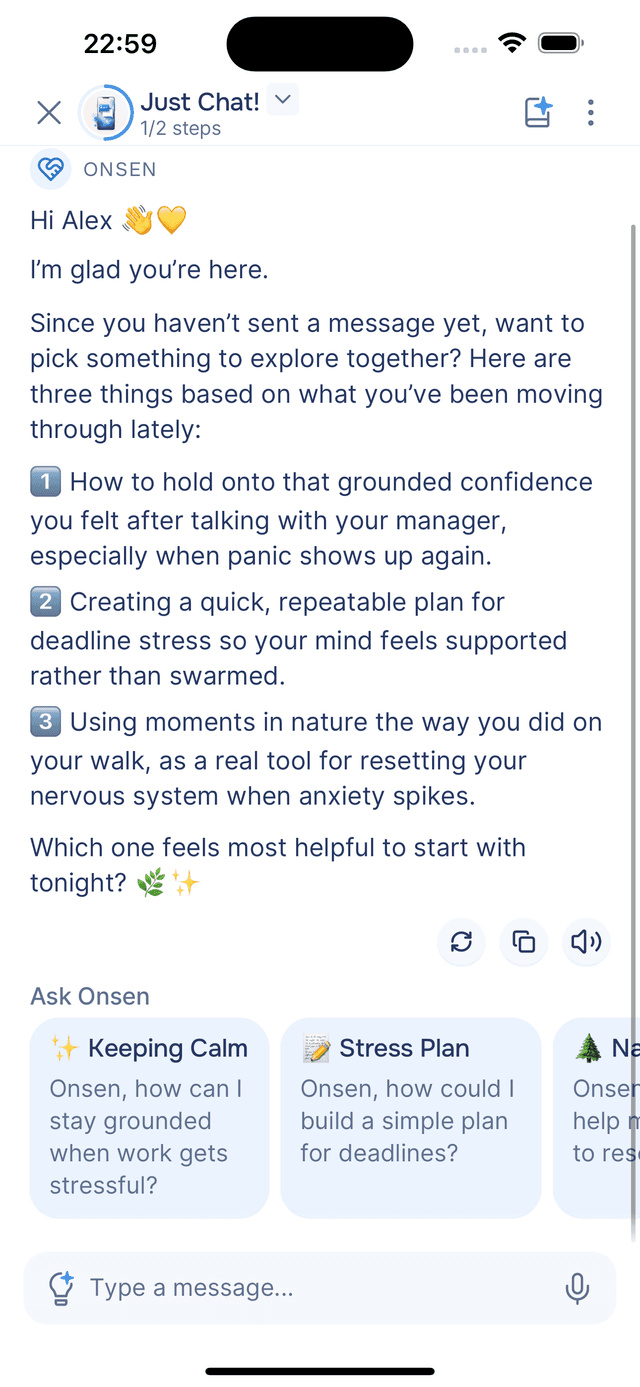
Sometimes you need to name what's draining you before you can do anything about it. Onsen's Just Chat lets you talk through what's weighing on you at any time. It's not therapy, but it's a way to step back, notice the pattern, and start figuring out what needs to change.

CBT (when cynicism takes over)
When burnout breeds toxic thought patterns ("nothing matters," "I'm terrible at this," "everyone's out for themselves"), CBT-based interventions[17] can help break the cycle. Onsen's Clear Negative Thoughts exercise walks you through identifying the thought, examining the evidence, and reframing it.
Sleep
Sleeping less than 6 hours[18] is the single biggest risk factor for developing clinical burnout, even after accounting for work demands. Burnout and sleep problems feed each other: burnout disrupts sleep, and poor sleep deepens burnout. Protecting your sleep isn't optional. It's the foundation everything else rests on.
Addressing the system
Individual coping strategies matter, but they're not enough on their own. Fixing the workplace itself,[19] changing the conditions that cause burnout, does more lasting good than telling people to practice self-care.
If the problem is your workload, your manager, or your organization's values, no amount of meditation will fix it. Sometimes the answer is a conversation with your boss. Sometimes it's a different role. Sometimes it's leaving.
When to get help
Burnout can look a lot like depression, and the line between them gets blurry. Talk to a doctor or therapist if:
- Your symptoms have lasted more than a few weeks and aren't improving
- You've lost interest in things outside of work
- You're using alcohol or other substances to cope
- You're having thoughts of self-harm or suicide
- Rest and changes to your routine haven't helped
A GP can screen for depression and rule out medical causes (thyroid issues, anemia, sleep disorders can mimic burnout). A therapist can help you untangle what's situational from what's clinical.
How Onsen can help
Onsen is a free AI companion for mental health. It won't fix your workload or change your manager, but it can help you process what's happening and start noticing patterns.
Burnout builds gradually, which makes Mood Check-In and the Stress Tracker especially useful: tracking how you feel over weeks can reveal a pattern you're too close to see. When cynical thought spirals take hold ("nothing matters," "I'm terrible at this"), the Clear Negative Thoughts exercise helps you examine the evidence and find a more balanced view. And when you just need to name what's draining you, Just Chat is there at any time, day or night.
We published 18 months of outcome data from our own users, and the people who engaged regularly saw the most improvement.
Start noticing
Burnout doesn't fix itself. But recovery starts with awareness. Pick one boundary, one walk, one conversation. That's enough for today.
If you want to learn more about specific topics from this article:
- Understanding depression
- What is CBT and how can an app help?
- Mental health support when you can't afford therapy
- How to start journaling when you don't know what to write
Sources
- 1.
- 2.
- 3.
- 4.
- 5.
- 6.
- 7.
- 8.
- 9.
- 10.
- 11.
- 12.
- 13.
- 14.
- 15.
- 16.
- 17.
- 18.
- 19.Panagioti et al. (2017). “Organizational interventions more effective for physician burnout.” [PubMed ]