What is CBT and how can an app help?
The most evidence-based therapy in the world, now in your pocket.
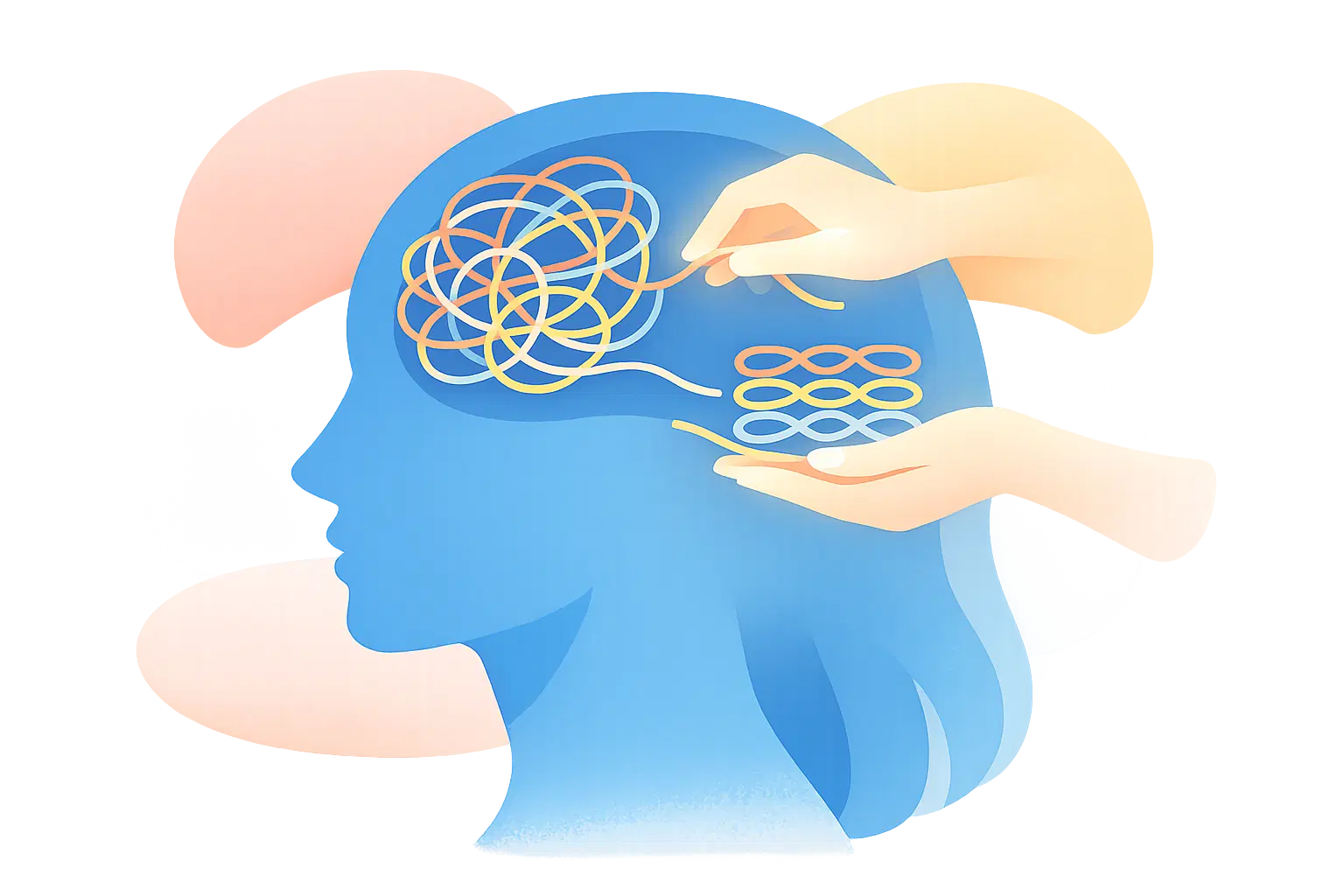
If you've ever looked into therapy for anxiety or depression, you've probably come across the letters CBT. It stands for Cognitive Behavioral Therapy, and it's one of the most widely studied and effective psychological treatments available. But what does it actually involve, and can an app really help you do it?
CBT in plain language
CBT is based on a simple but powerful idea: the way you think about a situation affects how you feel about it, and how you feel affects what you do. These three things (thoughts, feelings, and behaviors) are connected in a cycle, and changing one can change the others.
A quick example:
Situation: Your friend doesn't reply to your message for two days.
| Interpretation A | Interpretation B | |
|---|---|---|
| Thought | "They're ignoring me. I must have done something wrong." | "They're probably busy. I'll check in later." |
| Feeling | Anxious, hurt, rejected | Neutral, unbothered |
| Behavior | Avoid texting anyone, ruminate all evening | Send a casual follow-up when it feels right |
Same situation, completely different experience, driven entirely by the thought. CBT helps you notice when your automatic thoughts are distorted and replace them with more balanced ones.
What happens in a CBT session
A typical CBT exercise follows a structured process:


- Identify the situation: what happened that triggered difficult feelings?
- Name your emotions: what did you feel? Anxiety? Anger? Sadness? Often it's a mix.
- Catch the automatic thought: what went through your mind in that moment? This is your "hot thought," the one carrying the most emotional weight.
- Examine the evidence: what supports this thought? What contradicts it? Are there alternative explanations?
- Reframe with self-compassion: based on the evidence, what's a more balanced way to think about this? Not toxic positivity, just fairness.
- Check in again: how do you feel now compared to when you started?
This isn't about forcing yourself to "think positive." It's about being fair with yourself, the way you'd be fair with a friend in the same situation.
Why CBT works
CBT has more clinical evidence behind it than any other form of psychotherapy (Hofmann et al., 2012). Hundreds of studies have shown it's effective for:
- Generalized anxiety disorder
- Social anxiety
- Depression
- PTSD
- Insomnia
- Panic disorder
The reason it works so well is that it gives you a practical skill you can use on your own, not just insights you gain during a session. Our data confirms this: people who regularly use CBT exercises in Onsen show meaningful improvements in happiness and stress. Once you learn to catch and examine your automatic thoughts, you can do it anywhere: on the bus, before a meeting, lying in bed at 2am.
The accessibility problem
There's a catch: traditional CBT requires a trained therapist, typically costs $100-200 per session, and often involves long waiting lists. In the UK, 1.7 million people are on the mental health waiting list (BMA, 2025). Many people who would benefit from CBT never access it.
This is where technology can help. Not as a replacement for therapy, but as a way to practice CBT techniques between sessions, while on a waiting list, or when professional help isn't accessible.
How Onsen uses CBT
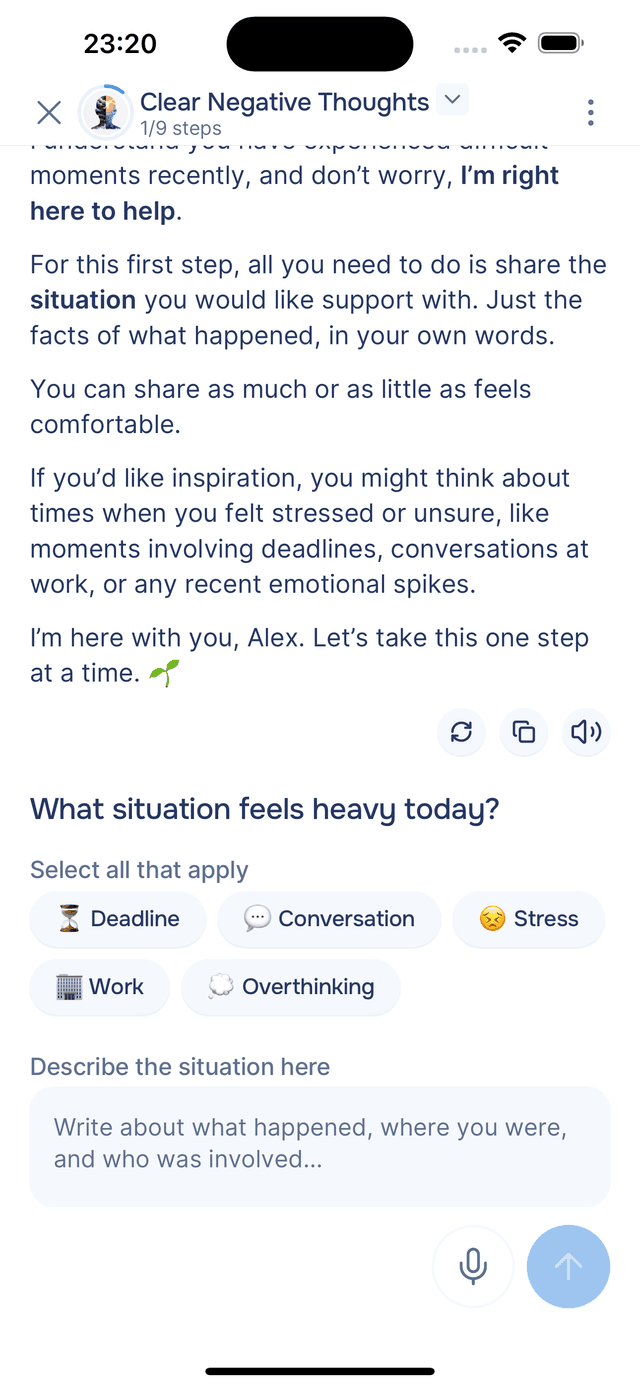
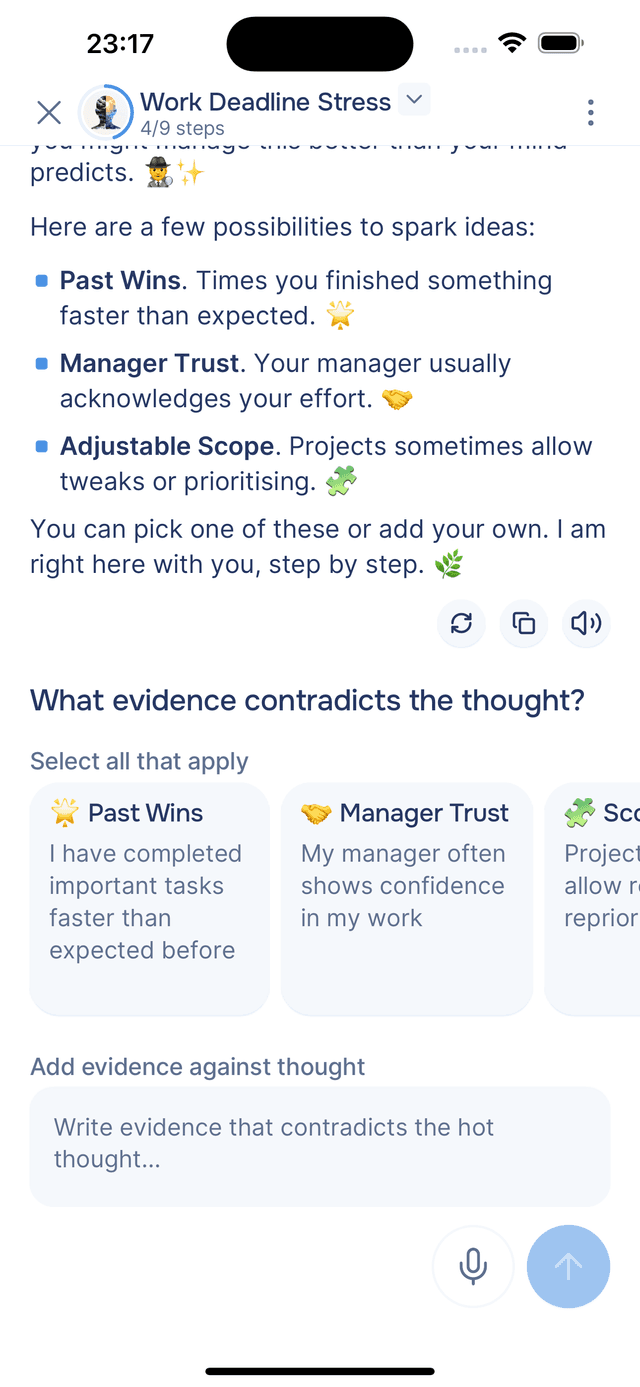
Onsen's Clear Negative Thoughts experience walks you through the full CBT thought record process described above (situation, emotions, thoughts, evidence, reflection, and reframing) in a guided conversation with your AI companion.
What makes it different from a worksheet:
- It asks follow-up questions. A paper thought record is static. Onsen's AI asks you to elaborate, clarifies what you mean, and helps you dig deeper into the evidence.
- It spots thinking patterns. The AI can identify cognitive distortions (like all-or-nothing thinking, catastrophizing, or mind-reading) and gently point them out.
- It remembers. If you've done the exercise before, the AI knows what patterns tend to come up for you and can reference previous situations.
- It writes your journal entry. At the end, the experience generates a first-person journal entry summarizing what you worked through, so you have a record to look back on.
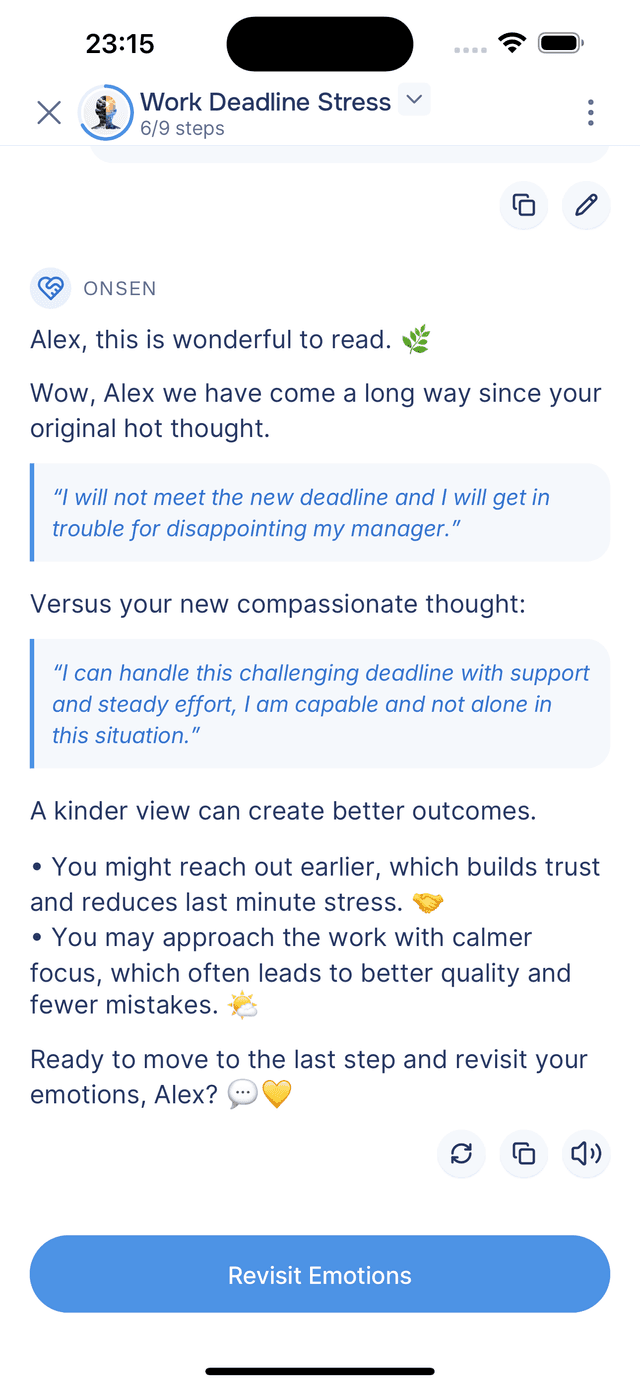
The whole thing takes 10-20 minutes and can be repeated whenever you notice unhelpful thought patterns returning.
CBT isn't just for crises
One of the most common misconceptions about CBT is that it's only for people with diagnosed conditions. In reality, everyone has automatic thoughts that distort reality. It's a normal part of being human. You don't need a diagnosis to benefit from examining your thinking patterns.
Stressed about a conversation you need to have? Run through the thought record. Anxious about an upcoming event? Examine the evidence. Beating yourself up about a mistake? Practice self-compassion.
CBT is a skill. The more you practice it, the more natural it becomes.
Want to try it? Download Onsen and start the Clear Negative Thoughts experience. It takes about 15 minutes and walks you through the entire process.