The thought record: a simple tool that changes how you think
It's a worksheet. It sounds boring. It works anyway.

There's a reason therapists have been handing patients the same worksheet since the 1970s. It's not because therapy hasn't evolved. It's because something genuinely changes when your thoughts move from inside your head to words on a page.
The thought record is the backbone of cognitive behavioral therapy. Aaron Beck introduced it in 1979 as a way to help people with depression catch the thoughts keeping them stuck. His idea was radical for the time: instead of treating negative thoughts as facts, treat them as hypotheses you can test.[7]
The version most therapists use today comes from Greenberger and Padesky's Mind Over Mood. It has seven columns, and each one does a specific job. Let's walk through all of them.
The 7 columns
1. Situation
What happened? Be specific: where were you, when, who was there, what triggered the shift in mood? You're not interpreting anything yet. Just the facts, like a news reporter.
Example: "Team meeting, Tuesday 2pm. Manager asked me for a project update in front of the whole team."
This matters because the same thought can hit very differently depending on the context. "I'm not good enough" after a bad review is different from "I'm not good enough" at 3am for no reason. The situation anchors everything that follows.
2. Emotions
What did you feel? Name the emotions and rate each one from 0 to 100 for intensity. This forces you to be specific. "Bad" isn't an emotion. Anxious, ashamed, frustrated, sad, angry — those are emotions. And there's usually more than one.
Example: "Anxious (80), ashamed (60)"
Rating the intensity might feel arbitrary, but it serves a purpose: you'll rate the same emotions again at the end. That before-and-after is how you see whether the thought record actually shifted anything.
3. Automatic thoughts
What went through your mind? Write down everything, then circle the "hot thought," the one most connected to the emotional spike. This is the thought you'll examine in the next columns.
Example: "I should be further along." "Everyone could tell I was unprepared." "My manager is going to lose confidence in me." → Hot thought: "Everyone could tell I was unprepared."
Automatic thoughts are fast and slippery. They often arrive as images, single words, or half-formed feelings rather than full sentences. Writing them down is the hardest part for most people. If you're stuck, try working backward from the emotion: "I felt a wave of shame — what thought came right before that?"
4. Evidence FOR the hot thought
What supports this thought? Stick to facts, not feelings. "I felt stupid" is not evidence. "I stumbled when answering the question about timelines" is evidence.
Example: "I hadn't finished the report. I paused for a few seconds when asked about timelines. I forgot to mention one deliverable."
This column feels counterintuitive. Why would you look for evidence that the bad thought is true? Because you need to take the thought seriously before you can challenge it. If you skip straight to "it's fine, stop worrying," the emotional brain doesn't buy it. You have to show that you've honestly considered the case before presenting the counter-evidence.
5. Evidence AGAINST the hot thought
What contradicts it? This is where the work happens. What would you point out to a friend who was thinking this? What are you ignoring or minimizing?
Example: "Nobody frowned or looked surprised. My manager nodded and moved on to the next person. Two colleagues asked follow-up questions afterward, which suggests interest, not judgment. I've given updates before that went well. One rough moment doesn't define the whole meeting."
This is the hardest column during depression or anxiety, because the negativity filter makes positive evidence feel invisible.
6. Balanced thought
Now write a more realistic version of the hot thought. Not a positive affirmation. Not "everything is fine." A thought that accounts for BOTH columns of evidence.
Example: "I wasn't as prepared as I wanted to be, but the meeting went fine. One stumble doesn't mean everyone thinks I'm incompetent. If it were that bad, someone would have said something."
A good balanced thought feels true, not just nice. If it feels forced or fake, it won't stick. The goal isn't to replace a negative thought with a positive one. It's to replace a distorted thought with an accurate one.
7. Re-rate emotions
Go back to your emotion ratings from column 2 and rate them again. Most people see a drop, sometimes significant.
Example: "Anxious (35), ashamed (20)"
You won't always feel dramatically better. Sometimes the numbers barely move. That's okay. The point isn't to feel great after every record. It's to practice the skill of examining thoughts instead of accepting them at face value. The cumulative effect is what matters.
A complete example
Here's what a finished thought record looks like, all seven columns in one view:
| Situation | Emotions | Hot thought | Evidence for | Evidence against | Balanced thought | Re-rate |
|---|---|---|---|---|---|---|
| Team meeting. Manager asked for update in front of everyone. | Anxious (80), Ashamed (60) | "Everyone could tell I was unprepared." | Hadn't finished report. Stumbled on timeline question. | No negative reactions. Manager nodded, moved on. Two colleagues asked follow-ups. Have given good updates before. | "I wasn't fully prepared, but the meeting went fine. One rough moment doesn't define me." | Anxious (35), Ashamed (20) |
The whole process takes 10-15 minutes once you get the hang of it. The first few times will take longer because you're learning a new skill.
Why it actually works
Writing creates distance
When a negative thought is in your head, it IS your reality. "I'm going to fail" doesn't feel like a thought. It feels like a fact.
When you write it down, something shifts. The thought moves from being your entire world to being a sentence on a page. You're no longer inside the thought. You're looking at it.
Research[1] shows that even a little bit of separation from a thought makes it feel less overwhelming and helps you think more clearly. The thought record creates that step back automatically. You can't write "I'm going to fail" without briefly becoming the person observing the thought rather than the person drowning in it.
It breaks confirmation bias
Your brain naturally gravitates toward evidence that supports what you already believe. In depression and anxiety, this bias gets cranked to full volume. You notice every piece of evidence that confirms the worst and filter out everything else.
Column 5 (evidence against) breaks this by forcing you to look for the other side. Research[2] confirms that actively looking for evidence against a negative thought is one of the most effective ways to change how you feel. The thought record makes this concrete and repeatable instead of something you try to do in your head, where the confirmation bias is running the show.
Just tracking changes behavior
Even before you get to the reframing step, simply monitoring your thoughts shifts them. Psychologists have a name for this: just tracking something changes it. Studies show[3] that regularly writing down your thoughts and feelings shifts your behavior on its own. The thought record turns patterns that run in the background into something you can actually see.
The homework effect
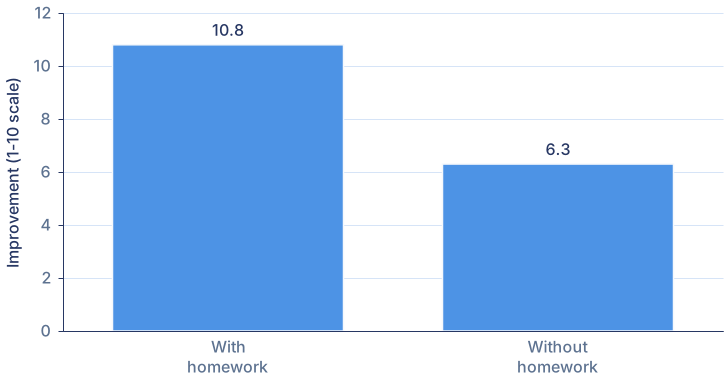
People who do thought records between therapy sessions see significantly better outcomes than those who only talk about their thoughts in session. The difference is substantial:[8]
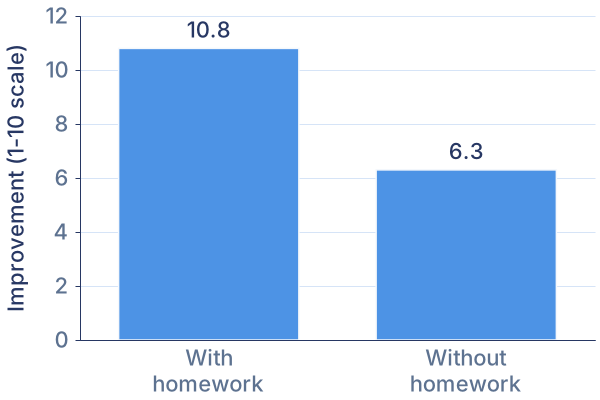

The worksheet isn't busywork. It's where the actual change happens.
When it feels hard
"I can't identify my thoughts"
This is the most common problem, and it's not a sign you're doing it wrong. Automatic thoughts are fast and habitual. They come and go before you even notice them.
The trick: work backward from emotion. When you notice a mood shift (a sudden wave of anxiety, a drop in energy, a flash of irritation), pause and ask: "What just went through my mind?"
Another approach: the downward arrow. Start with whatever thought you CAN identify ("this meeting is going to go badly") and ask "if that were true, what would that mean?" Keep going until you hit the core fear. Often it's something like "I'm not competent" or "people will reject me." Therapists use this technique[4] to trace surface-level worries to the beliefs driving them.
"I can't find evidence against the thought"
This is especially hard during depression[5], when everything negative feels loud and anything positive feels invisible.
The single best workaround: "What would I say to a friend who told me they were thinking this?" You'd probably be kinder, more balanced, more fair. That response IS your counter-evidence. The thought record asks you to give yourself the same perspective you'd give to someone you care about.
"I get it intellectually but I still FEEL bad"
The head-heart gap. Knowing a thought is distorted and actually feeling different are two separate things. You can intellectually agree that "one bad presentation doesn't mean I'm incompetent" while your stomach still churns.
This is normal. Belief change happens through repetition, not through a single insight. The emotional shift lags behind the intellectual one, sometimes by weeks. Keep doing the records. Each one adds a small weight to the other side of the scale.
If you're stuck here, behavioral experiments can help. Instead of just analyzing the thought, test it. Send the email without triple-checking it. Ask the question in the meeting. Let the evidence come from experience, not just from the worksheet.
"It feels mechanical"
It does at first. So does learning to drive. People who stuck with guided thought records[6] said it felt forced at first but eventually became something they looked forward to. It gets less mechanical as it gets more familiar.
Starting small
You don't need all seven columns to start. Begin with three:
- What happened? (The situation.)
- What went through my mind? (The thought.)
- How did I feel? (The emotion, and its intensity from 0 to 10.)
That's enough to begin noticing patterns. After a week, you'll start seeing themes: the same thoughts, the same triggers, the same emotional responses. That awareness alone is valuable. When you're ready, add columns 4 and 5 (evidence for and against) and you'll have most of the benefit of the full version.
For more ways to start a writing practice, see our guide to how to start journaling.
How Onsen helps
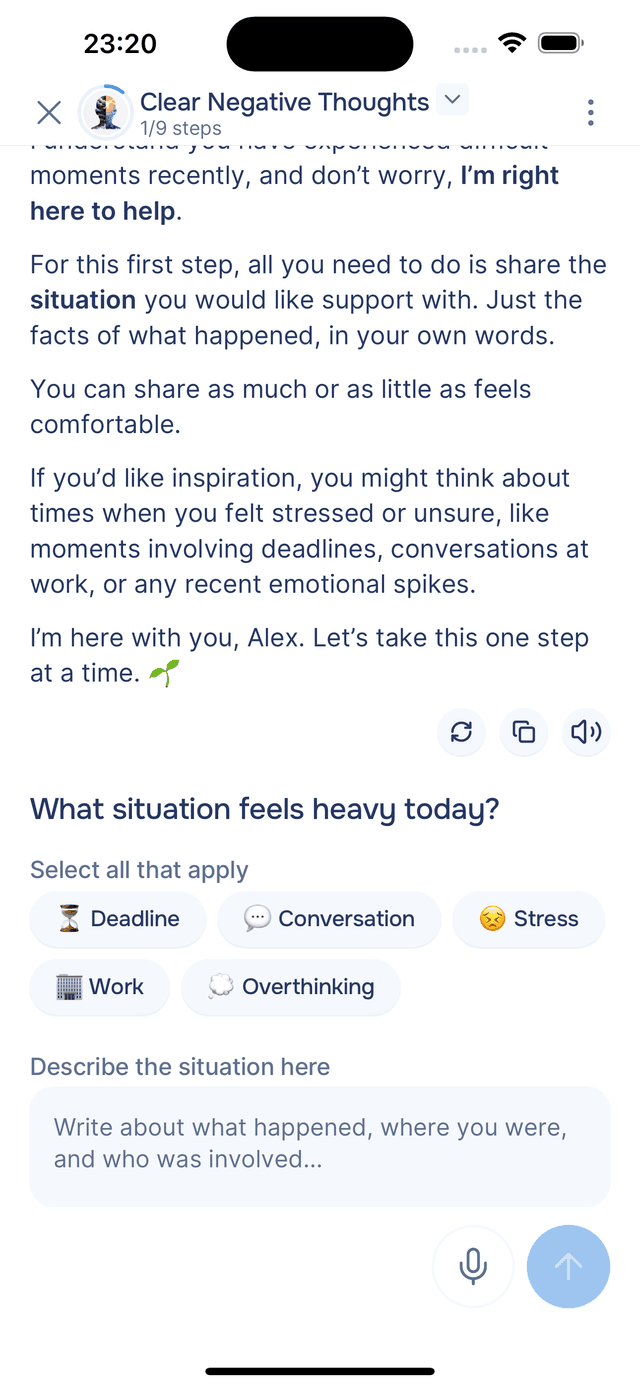
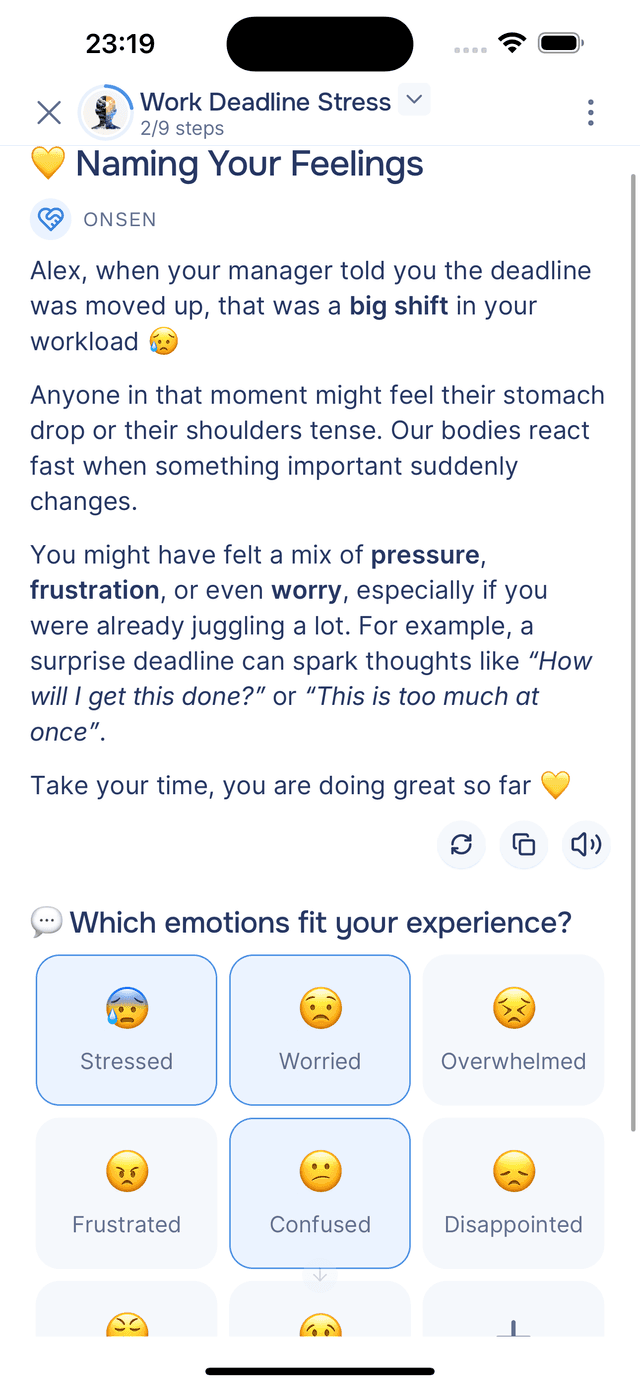
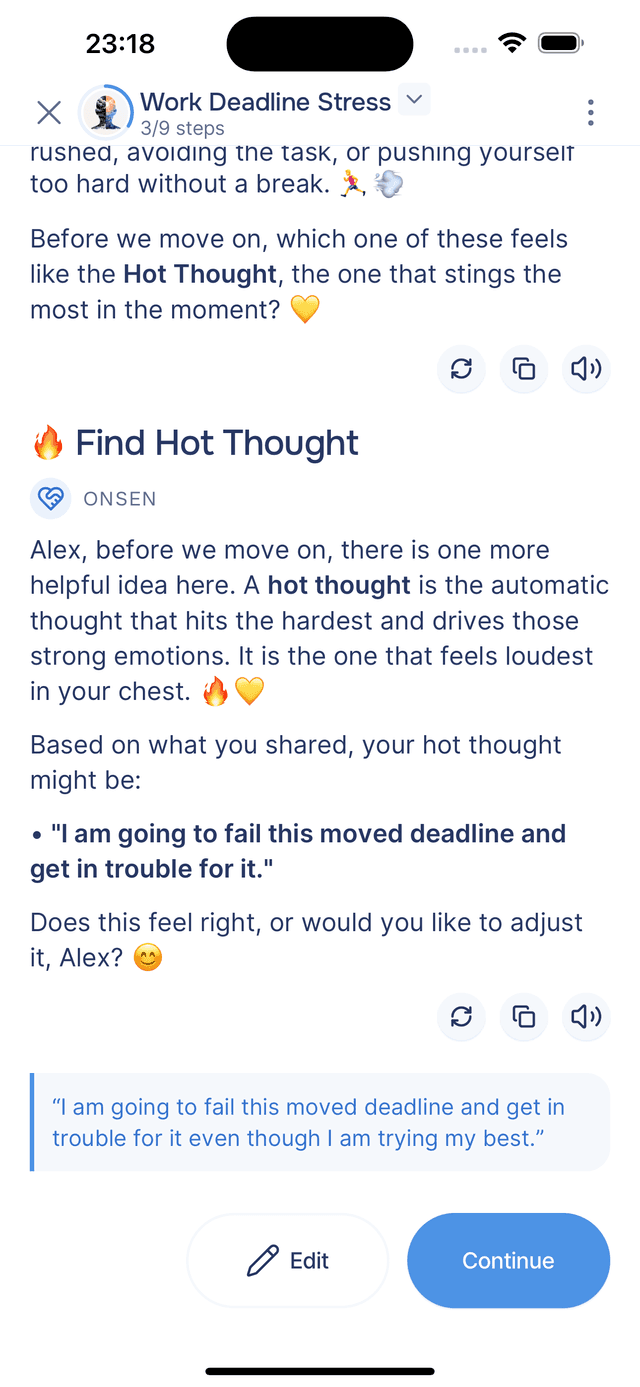
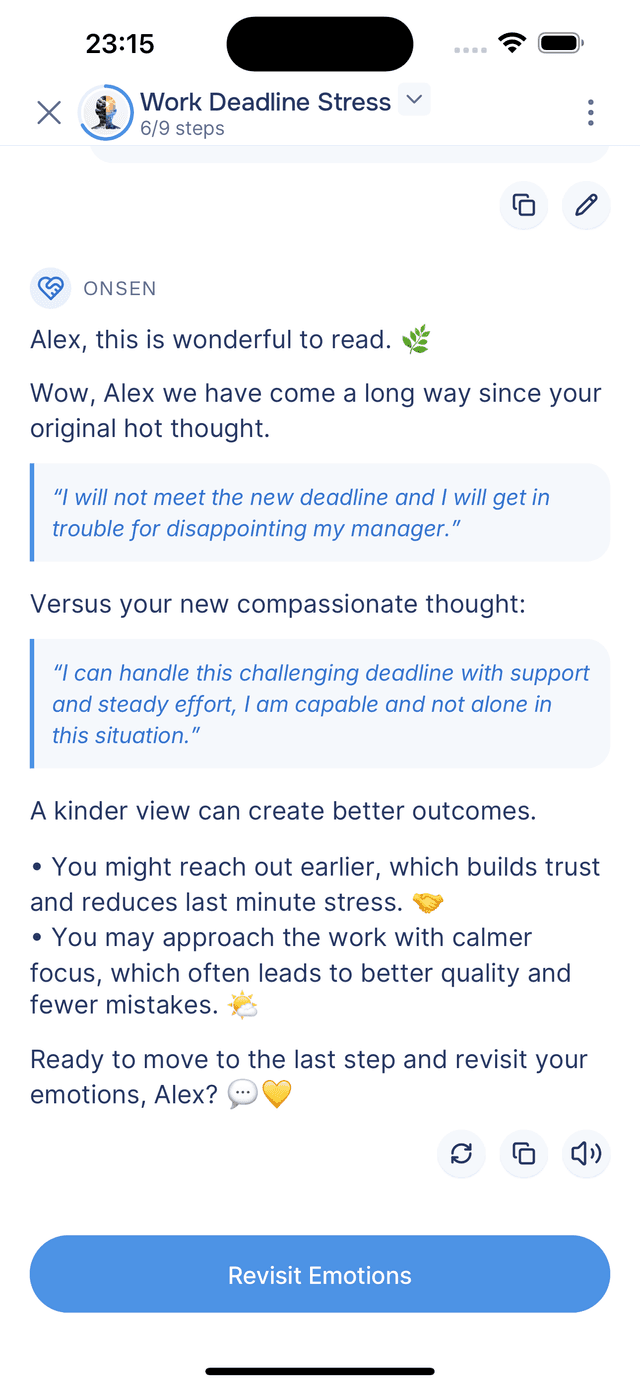
Onsen's Clear Negative Thoughts exercise is a guided thought record. It walks you through each step: what happened, what you thought, what you felt, what the evidence says, and how to find a more balanced perspective. The difference from a blank worksheet: the AI asks follow-up questions, so you don't have to figure out what comes next. And over time, as Onsen learns your patterns, the conversations get more relevant to what you're actually going through.
Download Onsen and try your first guided thought record. It takes 10-15 minutes.
One thought at a time
You don't need a therapist to start. You need a piece of paper and one honest thought. Write down what happened. Write down what you thought about it. Write down how it made you feel. Then look at what you wrote and ask: is this the whole truth?
That question, asked consistently, is how thinking changes. Not in a flash of insight, but one thought at a time.
Sources
- 1.
- 2.
- 3.
- 4.
- 5.
- 6.
- 7.Fleming, J.E. et al. (2021). “A Brief History of Aaron T. Beck, MD, and Cognitive Behavior Therapy.” [PMC ]
- 8.Kazantzis, N. et al. (2010). “Homework in CBT: a meta-analysis of 46 studies.” [onlinelibrary.wiley.com ]