Mindfulness for people who hate meditation
You don't have to sit cross-legged and think about nothing.

You've tried meditating. You sat down, closed your eyes, and spent 10 minutes thinking about your grocery list, your ex, and that thing you said in 2019. Then you felt worse because you couldn't even relax right.
You're not alone. Over 95% of people who download a meditation app stop using it within a month.[1] Formal meditation programs lose 15 to 30% of participants before they're done.[2] And when researchers surveyed 434 regular meditators, half reported at least one negative experience, including anxiety and emotional overwhelm.[3]
Meditation clearly isn't for everyone. But most people don't realize: mindfulness and meditation are not the same thing.
Mindfulness is not meditation
Meditation is one way to practice mindfulness. It's not the only way, and for a lot of people, it's not even the best way.
Mindfulness just means noticing what's happening right now, without judging it.[4] That's it. You can do that with your eyes open, your shoes on, and your phone in your hand.
The evidence for mindfulness is strong. Across 209 studies and over 12,000 people, mindfulness-based approaches helped with anxiety, depression, and stress.[5] When researchers compared mindfulness and CBT across 30 studies, they worked equally well for depression.[6] The UK's top health authority recommends mindfulness-based therapy to keep depression from coming back.
But most of that evidence comes from programs that include much more than sitting meditation. MBSR (Mindfulness-Based Stress Reduction), the most studied program, includes walking meditation, yoga, body scans, and daily awareness exercises. Sitting still with your eyes closed is one small piece.
Why meditation doesn't work for everyone
The "empty your mind" myth. Meditation doesn't ask you to stop thinking. It asks you to notice your thoughts without getting caught up in them.[7] But most people don't know that, so they sit down expecting silence and feel like they've failed when their mind keeps going.
Stillness can make anxiety worse. For people with anxiety or trauma history, sitting quietly with their own thoughts can actually increase distress.[8] Research found that people with difficult childhoods are more likely to have a hard time in mindfulness programs for depression.[9] Silence isn't always safe.
It feels like another thing you're bad at. When meditation doesn't click, people blame themselves, which makes the stress even worse. You expected peace and got chaos, so now you feel bad about feeling bad. That loop pushes people away from trying again.
7 ways to practice mindfulness without meditating
An 8-week program using only informal mindfulness practices,[10] with no formal meditation at all, lowered stress, anxiety, and depression while people felt more satisfied with their lives. The effects lasted months. You don't need to meditate to become more mindful.
Here are seven approaches that work:
1. Walking
Pay attention to your feet hitting the ground, the temperature of the air, the sounds around you. One study found that mindful walking helped stressed people feel noticeably better.[11] No cushion required.
2. Writing
Journaling is mindfulness on paper. You're slowing down, observing your thoughts, and putting them into words. When journaling included mindfulness-style prompts, it helped with depression more than regular journaling.[12]
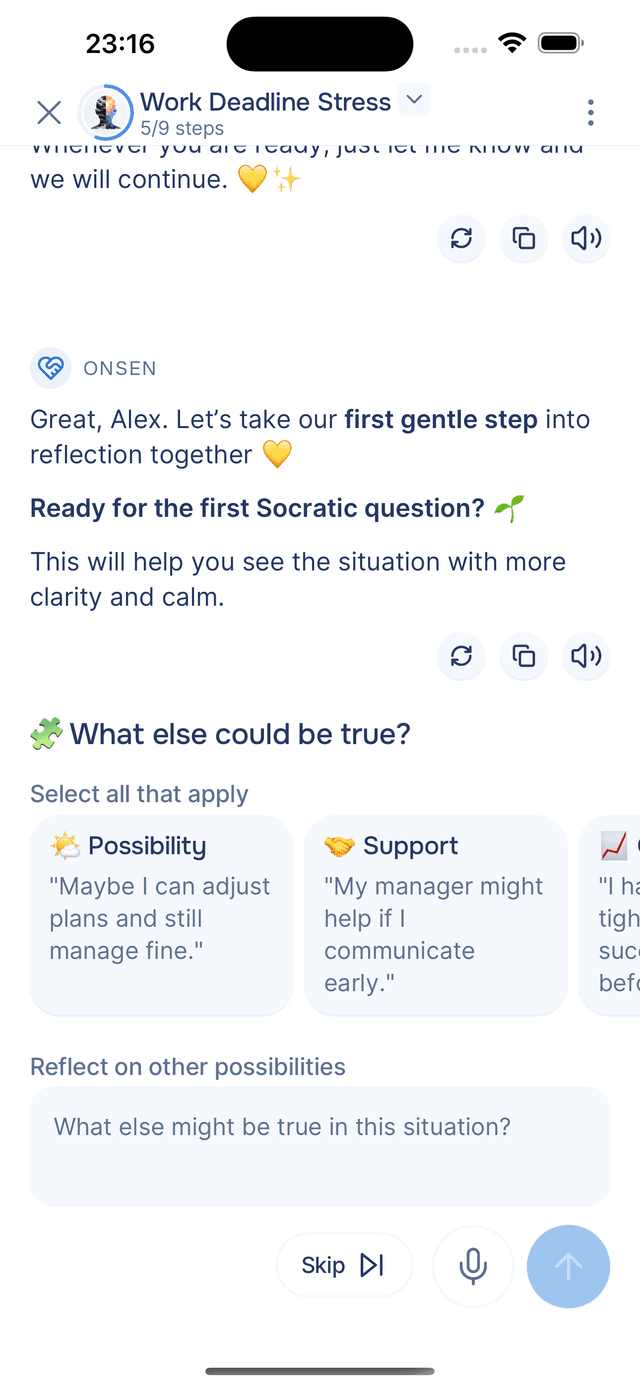
Onsen's guided journaling does this naturally: the AI asks you questions that help you notice what you're thinking and feeling, without you having to figure out where to start.
3. Listening
Actually listening to someone, without planning your response, without checking your phone, is a form of present-moment awareness. Next conversation you have, try just hearing what the other person is saying. Notice how different it feels.
4. Cooking or cleaning
Single-task something mundane. Notice the temperature of the water, the texture of what you're holding, the rhythm of chopping. The point isn't to enjoy dishes. It's to be fully present for five minutes instead of running on autopilot.
5. Breathing (3 breaths, not 30 minutes)
Three slow breaths before a meeting. A box breath (4 counts in, 4 hold, 4 out, 4 hold) in a traffic jam. Research shows 10 minutes is just as effective as 20 for improving mindfulness.[13] Even shorter pauses have value.
6. Body check-ins
Where am I tense right now? A quick mental scan from head to feet takes 30 seconds and builds body awareness over time.[14] You don't need a guided session. Just ask the question.
7. Talking it out
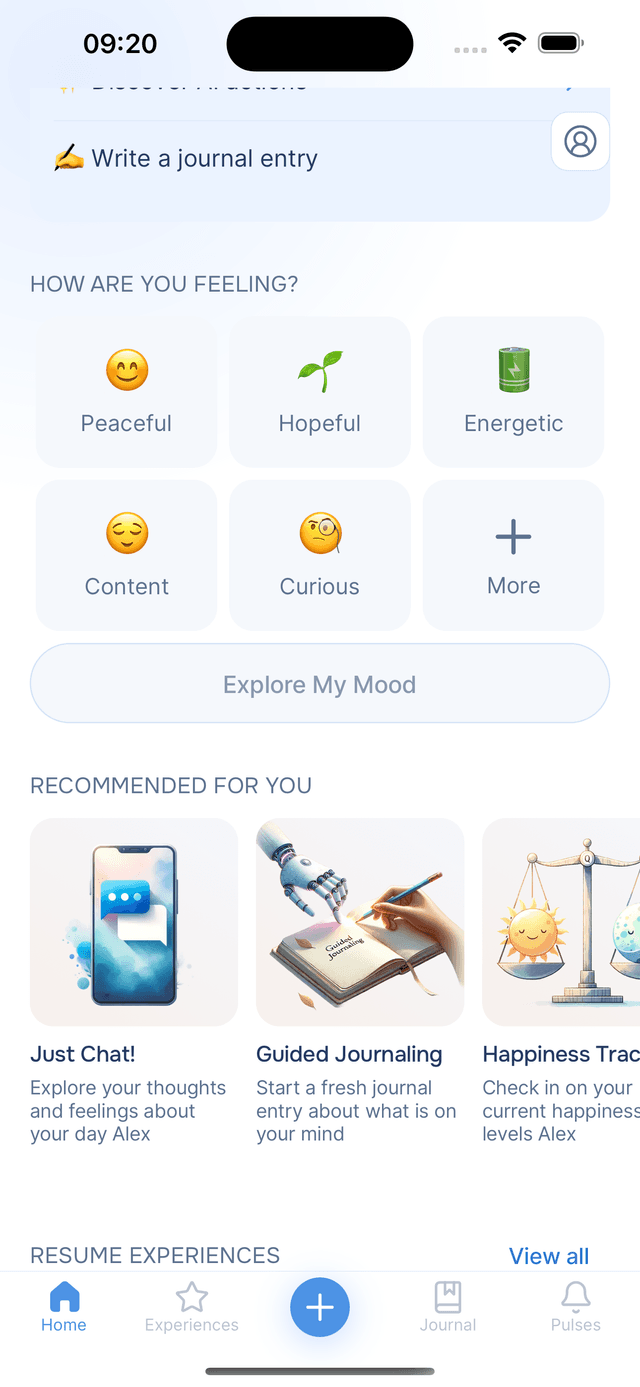
Reflecting on your day with someone, whether a friend or an AI, is a form of mindful awareness. You're noticing what happened, how you felt, and what it meant. Onsen's Just Chat works this way: the conversation helps you observe your own experience, not just talk about it.
When meditation is worth trying
Meditation works for a lot of people. A study comparing sitting and moving meditation found they helped people equally, and that both worked.[15] The point is that meditation is one option, not the only one.
If you want to give it another shot:
Start short. 10 minutes works as well as 20 for most people. Five is fine too. Research on short programs found that 93% of those under four weeks actually worked.[16]
Try guided over silent. Having someone else lead takes the pressure off. Onsen offers three types of guided meditation: affirmation, gratitude, and visualization. Each runs 5 to 15 minutes.
Try moving instead of sitting. Walking meditation, yoga, mindful stretching. A study comparing sitting and movement meditation found no difference in outcomes. If you can't sit still, don't.
How Onsen can help
Onsen is a free AI companion that offers multiple paths to mindfulness, not just meditation. The approaches mentioned above, like guided journaling, talking it out, and guided meditation, are all built in. Even the Mood Check-In counts: stop, notice how you're feeling, name it. That's mindfulness in 30 seconds.
We published 18 months of outcome data from our own users, and the people who engaged regularly saw the most improvement.
Start with what fits
Mindfulness isn't about being calm. It's about being aware. And you can build that awareness in whatever way works for your brain and your life.
If you're restless, try walking or cooking. If you're a verbal processor, try journaling or talking it out. If you need structure, try a guided exercise. Pick one thing and try it today.
If you want to learn more about specific techniques mentioned here:
- How to start journaling when you don't know what to write
- 5 journaling prompts for when you're feeling overwhelmed
- How AI journaling helps with anxiety
Sources
- 1.
- 2.
- 3.
- 4.
- 5.
- 6.
- 7.
- 8.
- 9.
- 10.Shankland et al. (2021). “Informal mindfulness practices reduce stress, anxiety, depression.” [PubMed ]
- 11.
- 12.
- 13.
- 14.
- 15.
- 16.