Mental health support when you can't afford therapy
You deserve support whether or not you can afford $150 an hour.

Therapy works. The evidence is clear, the benefits are real, and if you can access a good therapist, you should.
But here's the reality:
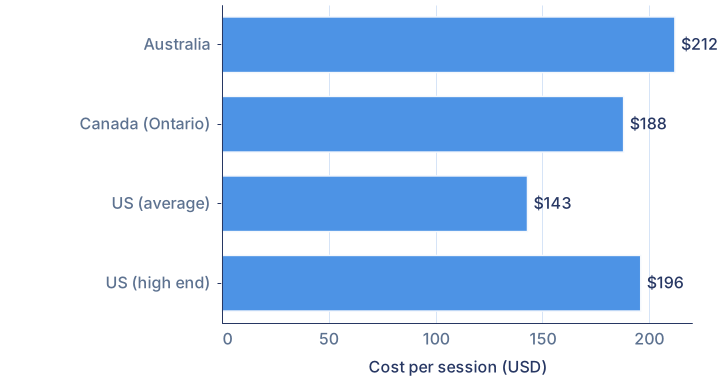
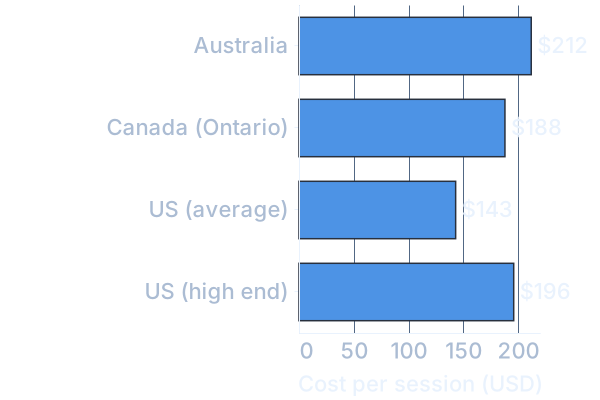
The average therapy session in the US costs $143[1]. A PhD psychologist who doesn't take insurance charges closer to $200[1]. In Canada, psychologists charge around $250 CAD per hour[2] in Ontario, and insurance typically covers only a few sessions per year. In Australia, the recommended fee is $318 AUD[3], with Medicare covering less than half.
And that's if you can get an appointment. In England, 5.2 million people were referred[4] to NHS mental health services in 2024, up 38% from 2019. In the US, 56% of psychologists have no openings[5], with waitlists stretching three months or longer. Over half of all US counties have zero psychiatrists[6].
Nearly 60% of Americans[7] who didn't get mental health treatment said they thought it would cost too much. In Australia, 75% named cost as one of their biggest barriers.
So what do you do when you need help but can't access a therapist?
The good news: real alternatives exist
The options below aren't replacements for therapy. If you're dealing with a serious mental health condition, please seek professional help. But for the roughly half of people who need mental health support and currently get nothing, any of these is better than waiting.
If you need help right now
If you're in crisis, these are free, immediate, and staffed by real people:
AI mental health apps
The evidence for app-based mental health support is growing. A large review of 176 studies[9] found that mental health apps produce real improvements in depression and anxiety. The effects are smaller than face-to-face therapy, but meaningful, especially for people who would otherwise get no support at all.
Our own data tells a similar story: 54% of Onsen users felt happier within 3 months, and users who engaged regularly saw 3x more improvement than light users.
Apps work best as a daily practice rather than a one-time fix. The people who benefit most are the ones who show up consistently: journaling, checking in with their mood, working through guided exercises.
Journaling
Free, evidence-based, and you can start right now. Research shows[10] that writing about your thoughts and feelings improves mental health, with stronger effects for anxiety and stress than for depression. You don't need a fancy app. A notebook works.
That said, guided prompts help. If you've ever stared at a blank page and given up, try starting with a specific question: 5 journaling prompts for when you're feeling overwhelmed.
Online CBT programs
Internet-based CBT[11] is the strongest digital alternative to face-to-face therapy. Multiple studies show it produces similar results, while requiring a fraction of the therapist time. Look for guided programs (where someone checks in on your progress) rather than purely self-directed ones, as completion rates are much higher.
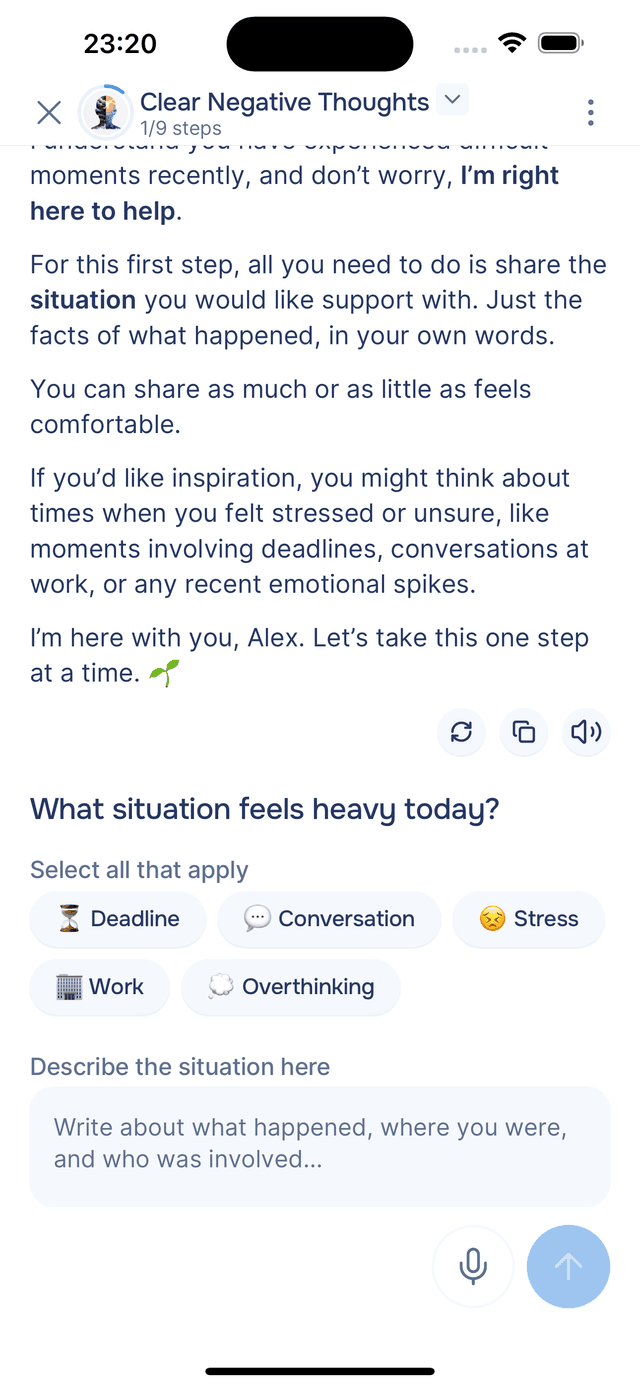
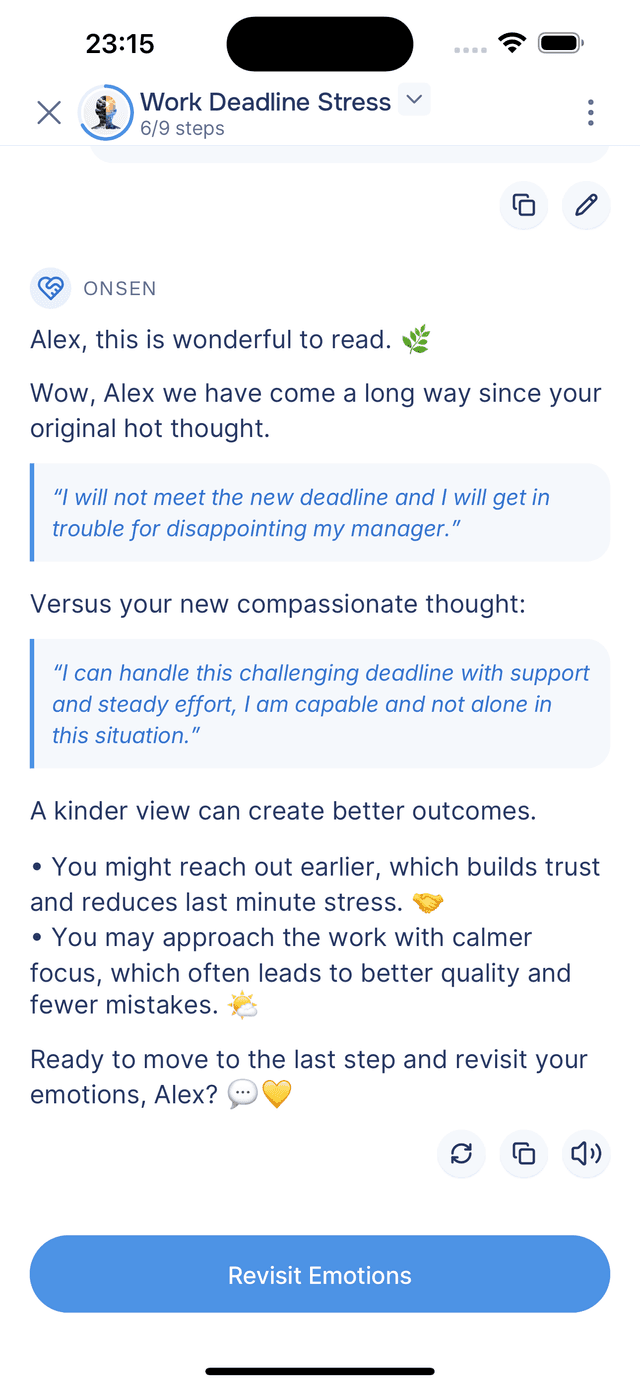
Onsen includes a guided CBT exercise that walks you through identifying negative thoughts and reframing them. It takes 10-20 minutes and saves your reflection as a journal entry.
Community and peer support
Talking to people who understand what you're going through can help. Organizations like NAMI (US) and Mind (UK) offer free support groups, both in person and online. Research shows[12] that peer support produces small but consistent improvements in recovery.
The quality varies. Look for groups facilitated by trained peers or mental health professionals rather than unmoderated forums.
The basics that actually matter
This section isn't exciting, but it's honest. Regular exercise, consistent sleep, and meaningful social connection are some of the most effective things you can do[13] for your mental health. They're free, and they work. Not as replacements for professional help when you need it, but as a foundation that makes everything else more effective.
Onsen brings several of these together
Many of the alternatives above work best in combination. Journaling helps, but it's easier with prompts. CBT exercises help, but they're hard to do from a workbook alone. Meditation helps, but guided is better than solo.
Onsen brings them together in one app:
- AI journaling with guided prompts and follow-up questions
- CBT exercises that walk you through reframing negative thoughts
- Guided meditation personalized from your journal
- Mood tracking and wellbeing assessments to measure real change
- Voice input for when typing feels like too much
Our data shows that 54% of users felt happier within 3 months, and the more consistently people used it, the more they improved.
It's not a therapist. But if you're between sessions, on a waitlist, or simply can't afford $143 an hour, it's a place to start.
You deserve support. It shouldn't depend on your bank balance or a six-month waitlist. Start somewhere. Pick one thing from this list and try it today. Any of these options is better than doing nothing.
Download Onsen for free.
Sources
- 1.
- 2.
- 3.
- 4.
- 5.
- 6.
- 7.
- 8.
- 9.
- 10.
- 11.
- 12.
- 13.