Why men don't talk about mental health (and how AI can help)
The problem isn't that men don't struggle. It's that the system wasn't built for how they process it.

Ask a man how he's doing and you'll almost always get the same answer: "I'm fine." Sometimes he is. Often he isn't. But the answer doesn't change, because for most men, admitting you're struggling feels like admitting you've failed.
This isn't a character flaw. It's the result of decades of socialization, reinforced by a mental health system that was largely designed without men in mind. The data is stark, the barriers are real, and the solutions may not be what you'd expect.
Men are dying, and not asking for help
The gap is stark:
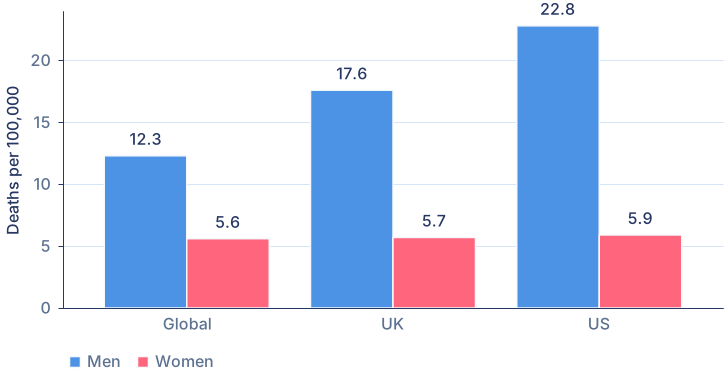
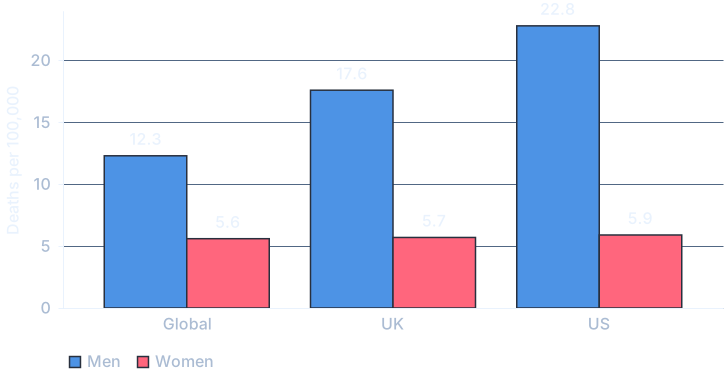
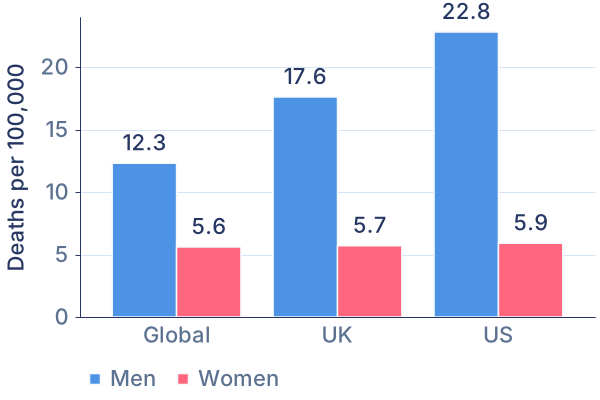
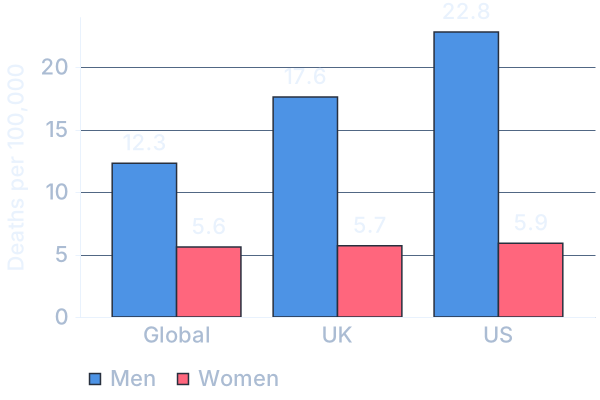
Globally, men die by suicide at more than twice the rate of women[1]. In the US, nearly 4 out of every 5 suicides are male[2]. In the UK, 3 out of 4 are[3].
And yet, when it comes to actually seeking help, the picture flips:
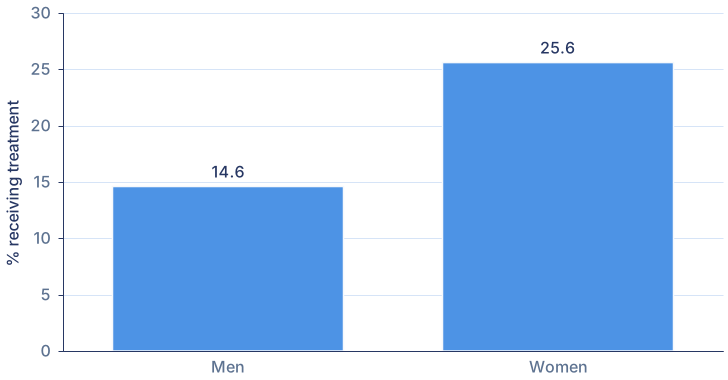
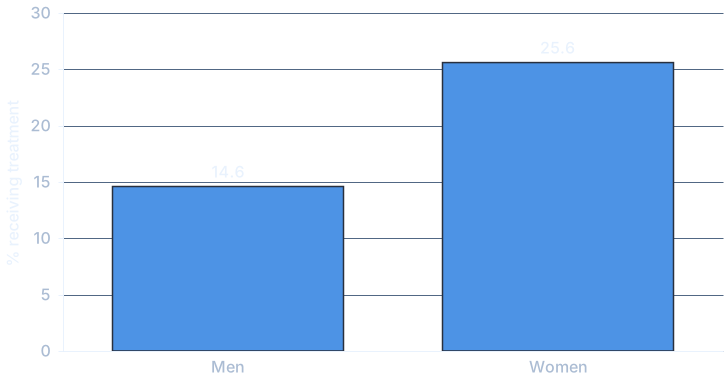
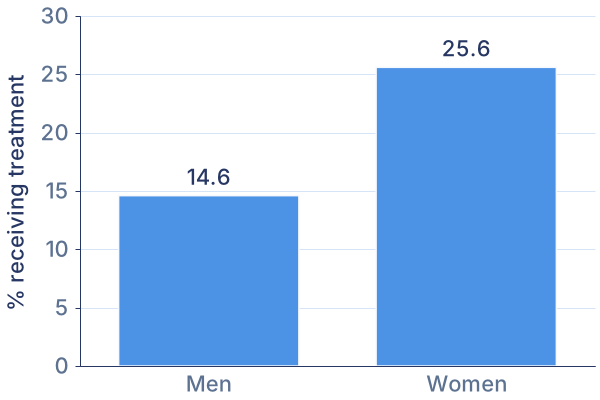
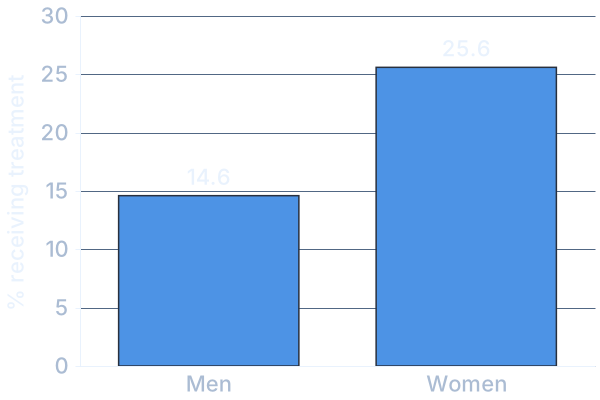
Only 14.6% of men[4] in the US received any mental health treatment in the past year, compared to 25.6% of women. In England, only 36% of therapy referrals[5] are for men. The people most at risk are the least likely to get help.
Men do care. The wiring just works differently.
Why don't men seek help? "Stigma" is the easy answer, but four decades of research paint a more specific picture.
"Asking for help means I've failed." Most men are taught — not explicitly, but through a thousand small signals — that self-reliance is core to who they are. A major meta-analysis[6] across nearly 20,000 men found this belief is the single strongest predictor of whether a man will seek help. It's not stubbornness. It's identity.
Many men can't name what they feel. Psychologist Ronald Levant calls this "normative male alexithymia": a learned difficulty in identifying and putting words to your own emotions. Boys are socialized to suppress vulnerability, and by adulthood many men genuinely don't have the vocabulary for it. When someone asks "how are you feeling?" and you honestly don't know, "I'm fine" is the only answer available.
Depression feels like failing at being a man. Research with men who have depression[7] found they frequently experience it as a direct threat to their role as provider and protector. The illness becomes proof of the failure, creating a vicious cycle that makes reaching out feel impossible.
The system doesn't fit. The traditional therapy model (book an appointment, sit in a room with a stranger, talk about your feelings for 50 minutes) is designed around exactly the things these barriers make hardest. The most common reasons men give[8] for not seeking help: embarrassment, not wanting to talk about feelings, and anxiety about the process itself.
What actually works
Men don't reject mental health support entirely. They reject formats that feel passive, exposed, or threatening to their autonomy. When the format changes, engagement changes.
Writing helps men more than it helps women. This is one of the most surprising findings in the field. When researchers studied the health benefits of expressive writing[9], men showed more than twice the benefit compared to women.
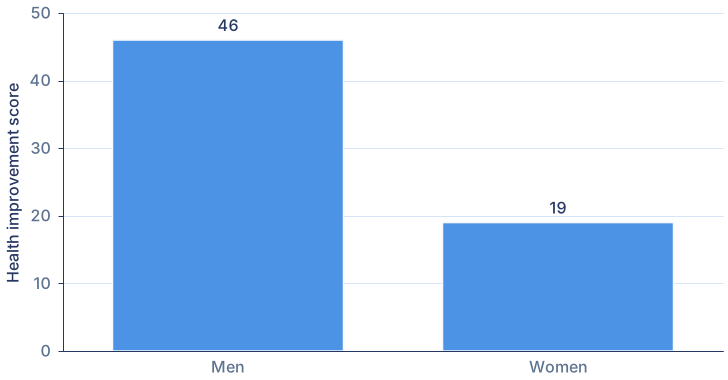
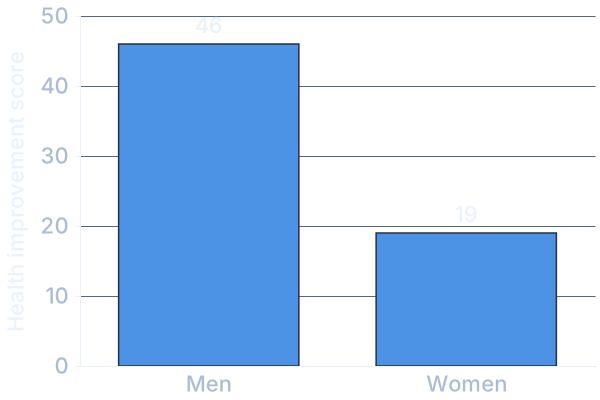
Why? Writing is private. It's structured. You don't have to look anyone in the eye. For men who've been taught to restrict emotional expression, a journal may be the first safe space they've ever had to process what they feel.
Young men prefer digital support. A 2025 review of the research[10] found that young men show a clear preference for online help-seeking over face-to-face. The researchers recommended that instead of pushing men toward in-person therapy they're uncomfortable with, we should invest in high-quality digital options.
Men want to do something, not just talk. The most comprehensive review of what engages men in treatment[11] found they prefer approaches that are collaborative, action-oriented, and goal-focused. They want structure, exercises, and tools they can use, not open-ended conversation. Studies of digital mental health tools[12] confirm this: men want personalized content, self-monitoring, and concrete exercises that give them a sense of control.
Where AI comes in
Let's be honest: the direct evidence that men specifically engage more with AI mental health tools is still early[13]. Most studies in this space skew heavily female, and no large-scale study has directly compared men's and women's engagement with mental health chatbots.
But we do know this: AI-guided journaling happens to address every single barrier the research identifies.
- Private — no waiting room, no receptionist, no one who might see you
- Text-based — the format where men show the biggest benefit
- Available anytime — no scheduling, no commute, no time off work
- Structured — guided prompts, CBT exercises, mood tracking
- Judgment-free — the barrier most consistently identified[14] as keeping men from seeking help
Two early studies hint that this alignment translates into practice. A survey of over 2,000 people[15] found men were significantly less resistant to AI-based therapy than women. A chatbot study[16] found men formed stronger therapeutic bonds with the AI, likely because they felt less shame and less fear of judgment.
What we see on Onsen
Among our active users, men journal at 92% the rate of women: 2.3 entries per month versus 2.5. In a world where men are nearly twice as likely[4] to avoid mental health support entirely, that near-parity says something.
Men on Onsen also start an average of 6.8 guided experiences per month: CBT exercises, guided journaling, mood tracking. Exactly the structured, action-oriented formats that the research says men prefer. Across all users, 18 months of data shows that this kind of consistent engagement leads to measurable improvement in happiness and stress.
What this means for you
The answer to "why don't men talk about mental health?" isn't that men don't care or don't suffer. It's that the traditional path — book an appointment, sit in a room, talk to a stranger — doesn't match how many men process their emotions.
That doesn't mean therapy is wrong. It means it's not the only way in.
For the man who'll never call a helpline, there's voice journaling. For the man who can't articulate what he's feeling, there's an AI that asks the right follow-up questions. For the man who won't schedule a therapy appointment, there's an app that's already in his pocket. For the man who needs someone to check in on him, there are Pulses, proactive notifications that reach out at the right moment.
None of this replaces professional help. But it might be the first step toward it.
If any of this resonated, try Onsen. Start a guided journaling session and write for five minutes. No one will see it. No one will judge it. Just get it out of your head.
Sources
- 1.
- 2.
- 3.
- 4.
- 5.
- 6.
- 7.
- 8.
- 9.Smyth (1998). “Expressive writing meta-analysis; Pennebaker, 2018 — overview.” [journals.sagepub.com ]
- 10.
- 11.
- 12.
- 13.
- 14.
- 15.
- 16.