Can AI replace therapy? What Onsen can (and can't) do
The honest answer is no. But that's not the whole story.

We get asked this a lot: "Is Onsen a replacement for therapy?"
The short answer is no. And we'd be worried about any AI product that said yes.
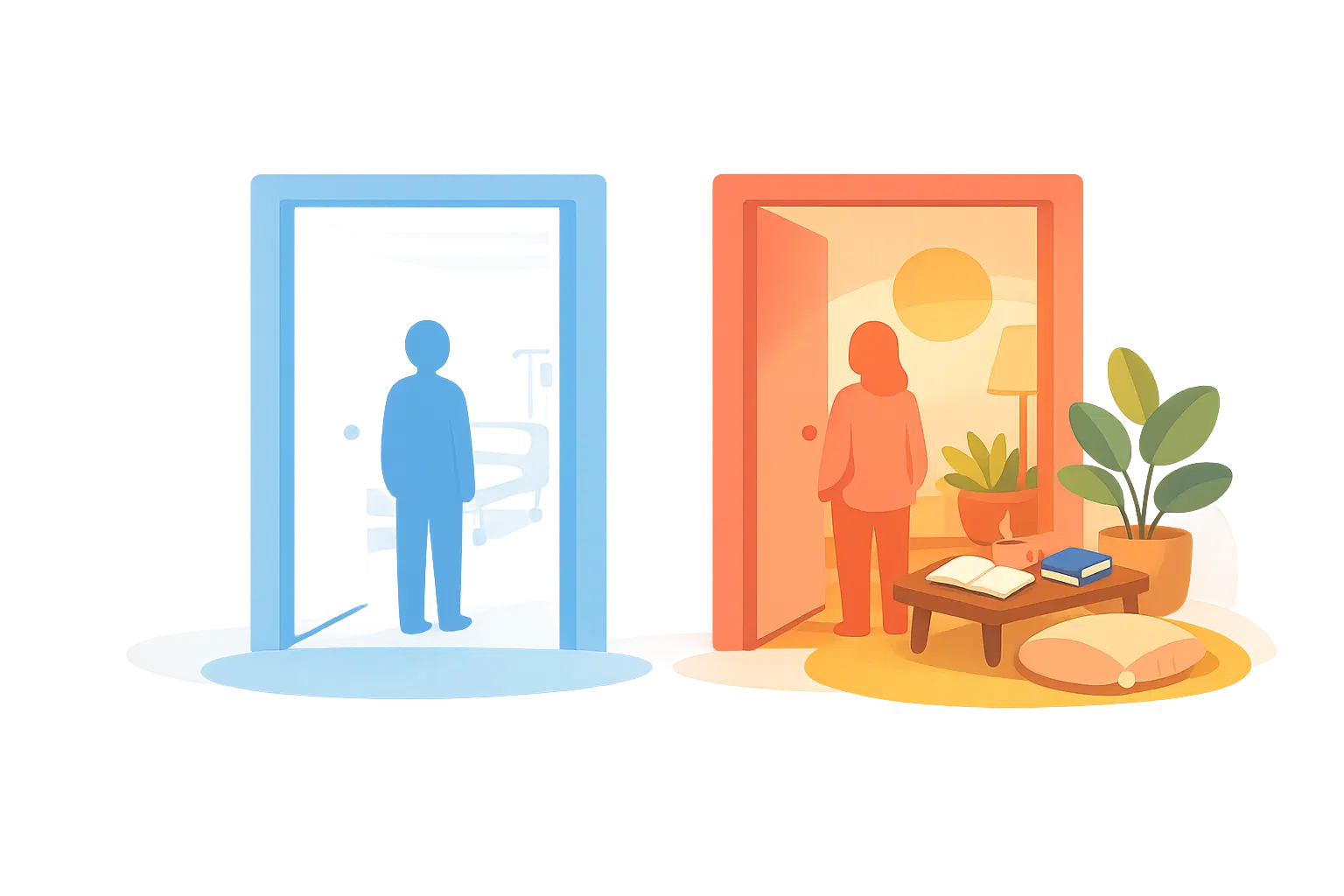
But the longer answer is more interesting, because it turns out AI and therapy aren't competing for the same space. They do different things, at different times, for different needs. Understanding that distinction is important.
What therapy gives you
A therapist offers something no app can replicate:
- Clinical assessment: a trained professional who can diagnose conditions, spot risk factors, and develop a treatment plan tailored to your specific needs
- The therapeutic relationship: the trust, safety, and accountability that builds over months of working with another human being
- Body language and nuance: a therapist picks up on what you're not saying, your tone of voice, your hesitation, the way you look away when a topic gets difficult
- Crisis intervention: the ability to assess risk and escalate to the right level of care when someone is in danger
These things matter. They save lives. Nothing we build will replace them.
What AI gives you
AI offers something different: availability.
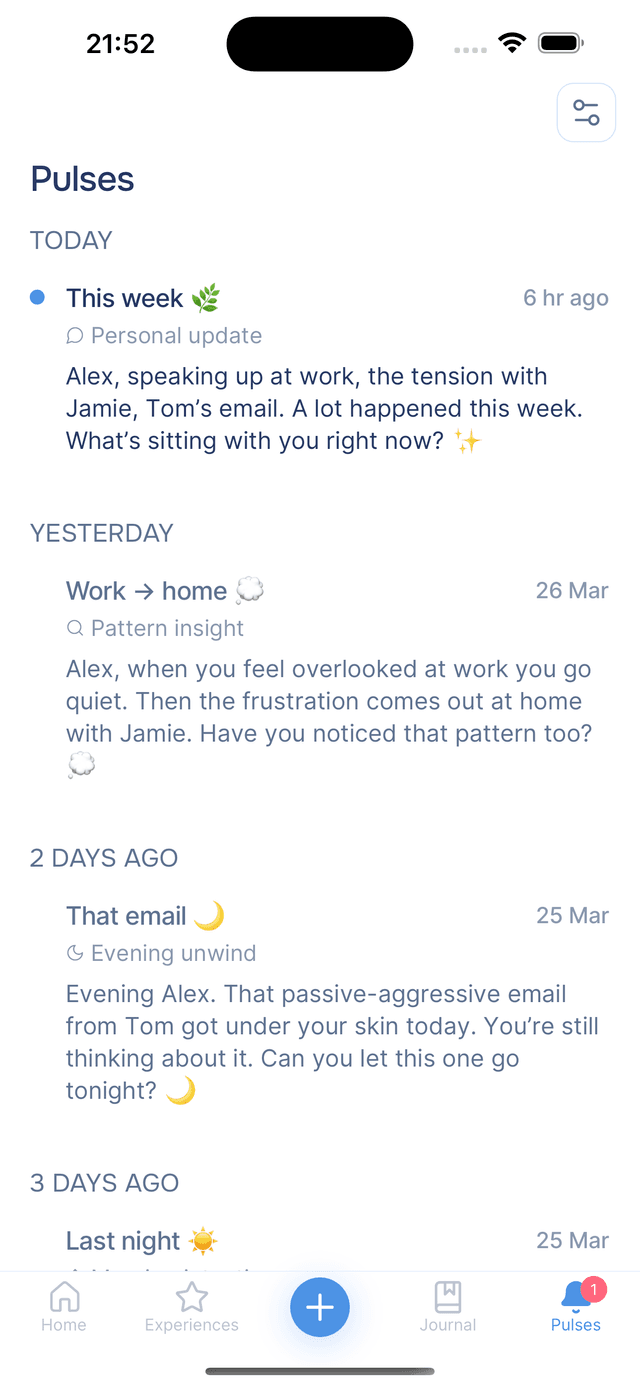
It's there at 2am when anxiety wakes you up. It's there in the bathroom at work when you need five minutes to decompress. It's there on a Sunday evening when the dread of Monday creeps in and your therapist's office is closed.
Onsen's AI is trained in evidence-based approaches like CBT and guided reflection. It can ask the right follow-up questions, help you reframe unhelpful thoughts, and track your emotional patterns over time. It does this consistently, patiently, and without judgment, 24 hours a day.
Where they overlap
Both therapy and AI-guided journaling help you (and our data backs this up):
- Develop self-awareness: understanding what triggers your difficult emotions
- Identify patterns: noticing that certain situations, people, or times of day consistently affect your mood
- Practice coping strategies: learning techniques like cognitive restructuring, gratitude, or mindfulness
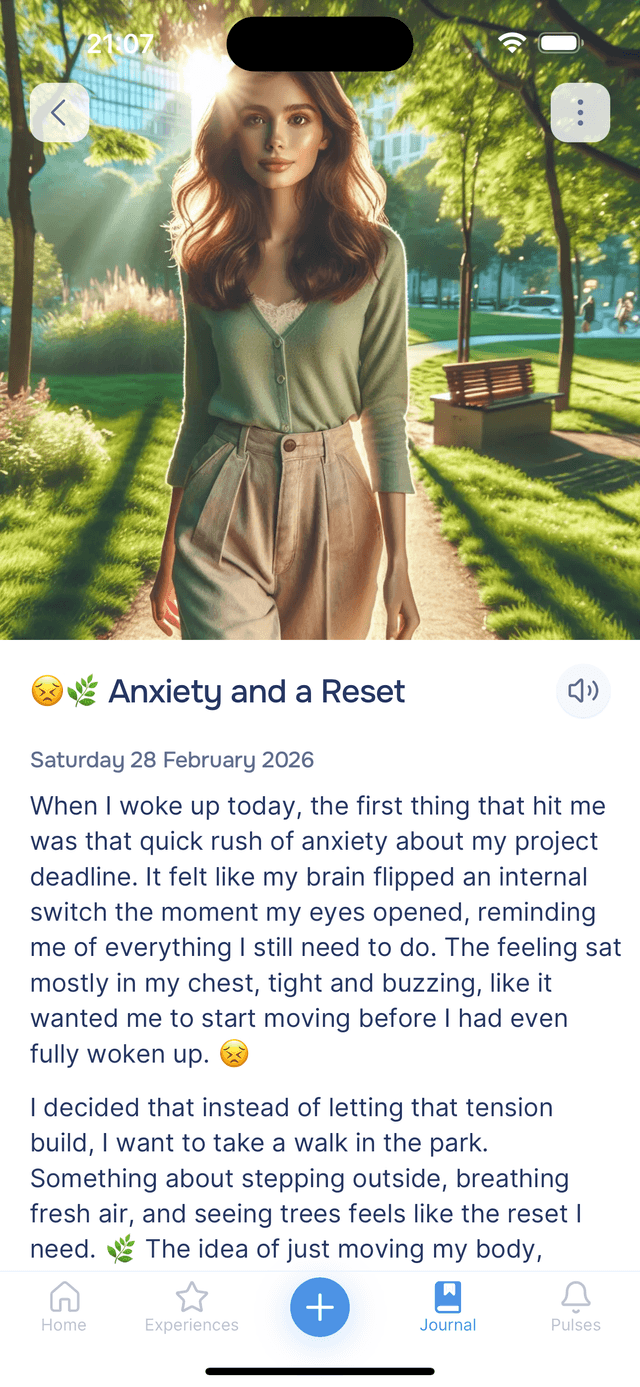
- Process difficult emotions: putting feelings into words, which research shows reduces their intensity
Where they don't overlap
AI cannot:
- Diagnose mental health conditions. It's not qualified, and it shouldn't try.
- Prescribe or manage medication. That's a psychiatrist's role.
- Handle crises. If someone is at immediate risk of harm, they need a human. Onsen connects users to crisis services when needed, but it's not a substitute for professional crisis care.
- Provide the human connection that's central to the therapeutic process. The relationship between therapist and client is itself a healing mechanism, and AI doesn't replicate that.
How they work together
This is where it gets practical. The people who benefit most from Onsen aren't using it instead of therapy. They're using it alongside therapy, or in the gaps where therapy isn't available:
Between sessions. Your therapist gives you homework: notice your thought patterns, practice gratitude, journal about what triggers you. Onsen gives you a structured place to do that work, with AI that reinforces the same principles your therapist is teaching.
On the waiting list. The UK's mental health waiting list stands at 1.7 million people (BMA, 2025). That's a lot of people struggling without support. Onsen can't replace what you'll get when your sessions start, but it can help you build self-awareness and coping skills in the meantime.
When therapy isn't accessible. Not everyone can afford $150 a week. Not everyone lives near a therapist. Not everyone is ready to sit in a room with a stranger and talk about their feelings. For those people, AI-guided journaling is a meaningful first step, often the step that builds enough self-awareness to eventually seek professional help.
After therapy ends. Therapy isn't forever. When your sessions wind down, Onsen helps you maintain the habits and skills you developed (regular check-ins, journaling, mood tracking) so the progress sticks.
What we believe
We believe the future of mental health support isn't either/or. It's and.
Professional therapy for when you need expert guidance. AI for when you need consistent, accessible, daily support. Both working together, each doing what they do best.
The question isn't "Can AI replace therapy?" The question is: "What would your mental health look like if you had support available every single day, not just during your weekly session?"
If you're currently in therapy, ask your therapist how Onsen might complement your work together. If you're not, it's a good place to start building the self-awareness that makes therapy more effective when you're ready.