Onsen vs ChatGPT for mental health: what's the difference?
Both use AI. One is a tool you pick up when you remember. The other is a companion that's there when you need it.
People ask us this all the time: "Why would I use Onsen when I can just talk to ChatGPT about my feelings?"
It's a fair question. ChatGPT is incredibly capable. You can absolutely open it up, type "I'm feeling anxious about work," and get a thoughtful, helpful response. So why does Onsen exist?
The short answer: ChatGPT is a general-purpose AI. Onsen is a mental health companion. The difference matters more than you'd think.
The conversation is just the beginning
When you talk to ChatGPT about your feelings, you get a good response. Maybe even a great one. But then what?
The conversation sits in a chat history you'll probably never revisit. There's no journal. No mood tracking. No way to see that you've written about work anxiety every Monday for the past month. No one checks in on you tomorrow to ask how that presentation went.
With Onsen, that conversation becomes something. It gets saved as a journal entry with extracted themes, mood, and insights. Over time, those entries build a picture of your emotional patterns, one you can actually see and learn from.
Memory that actually works
ChatGPT has a memory feature. It remembers things like "I have a dog named Max" or "I prefer short responses." It's useful for general productivity, but it's surface-level.
Onsen's memory is fundamentally different. It builds a personal knowledge graph from your journal entries, extracting people, places, themes, emotions, and situations. When you mention your sister, it knows you've been working through a complicated relationship with her. When you say you're stressed, it knows this is the third week in a row and connects it to the pattern of Sunday-evening dread you've been writing about.
This isn't a list of facts. It's an understanding of your life, one that deepens every time you write.
Purpose-built features
ChatGPT is a blank canvas. That's its strength for general use, and its weakness for mental health. You have to know what to ask for. You have to structure your own reflection. You have to remember to come back.
Onsen is designed around what actually helps:
| Feature | ChatGPT | Onsen |
|---|---|---|
| Open conversation | Yes | Yes |
| Persistent memory | Basic (remembers facts) | Deep: builds a personal knowledge graph from your journal with people, themes, and patterns |
| Guided therapeutic experiences (CBT, gratitude, reframing) | No (you'd need to prompt it yourself) | Yes, guided experiences built in |
| Mood tracking | No | Yes, daily mood check-ins with AI-powered insights |
| Journal with extracted insights | No | Yes, conversations become journal entries with themes and patterns |
| Proactive check-ins | No | Yes, Pulses reach out when you might need support |
| Personalized AI personality | One default style | 6 AI personalities, or design your own |
| Voice journaling | Voice input only | Full voice journaling with transcription |
| AI-generated art for entries | No | Yes, unique AI images generated from your words and mood |
Privacy is not optional
This is a big one. When you talk to ChatGPT about your mental health, your conversations are processed by OpenAI. Their privacy practices are solid, but ChatGPT is a general consumer product, not a health app. There's no specific commitment about how your mental health data is handled differently from your recipe requests.
Onsen is built around mental health data privacy:
- No one reads your entries — not even us, unless you ask for support or safety systems flag a concern
- Your data is not used to train AI models — our providers' API terms explicitly prohibit this
- You can delete everything at any time — your data, your choice
- Health data requires explicit consent — we ask separately, because it matters
When you're writing about your deepest anxieties, who handles that data, and how, really matters.
The "just use ChatGPT" problem
This is what actually happens when people "just use ChatGPT" for mental health:
- They have a good conversation
- They feel better for a moment
- They forget to come back
- When they do come back, they start from scratch
- There's no record of progress, no patterns surfaced, no growth tracked
Mental health isn't a single conversation. It's a practice. It needs structure, consistency, and something that meets you where you are, not just when you remember to open an app. 18 months of our data shows that the people who stick with it see real, measurable improvement.
Onsen has Pulses that check in on you, guided experiences that walk you through evidence-based techniques, and a journal that turns scattered conversations into a meaningful record of your inner life.
When ChatGPT is the right choice
We're not here to say ChatGPT is bad. It's remarkable. If you want to:
- Brainstorm solutions to a specific problem
- Get a quick perspective on a situation
- Draft an email about a difficult topic
- Research mental health topics
ChatGPT is great for that. It's a powerful thinking tool.
But if you want an ongoing relationship with an AI that knows your story, tracks your emotional patterns, guides you through therapeutic exercises, and proactively checks in when you might need support, that's what Onsen is built for.
The real question
The question isn't "Can ChatGPT help with mental health?" It can. The question is: "Do you want a tool, or do you want a companion?"
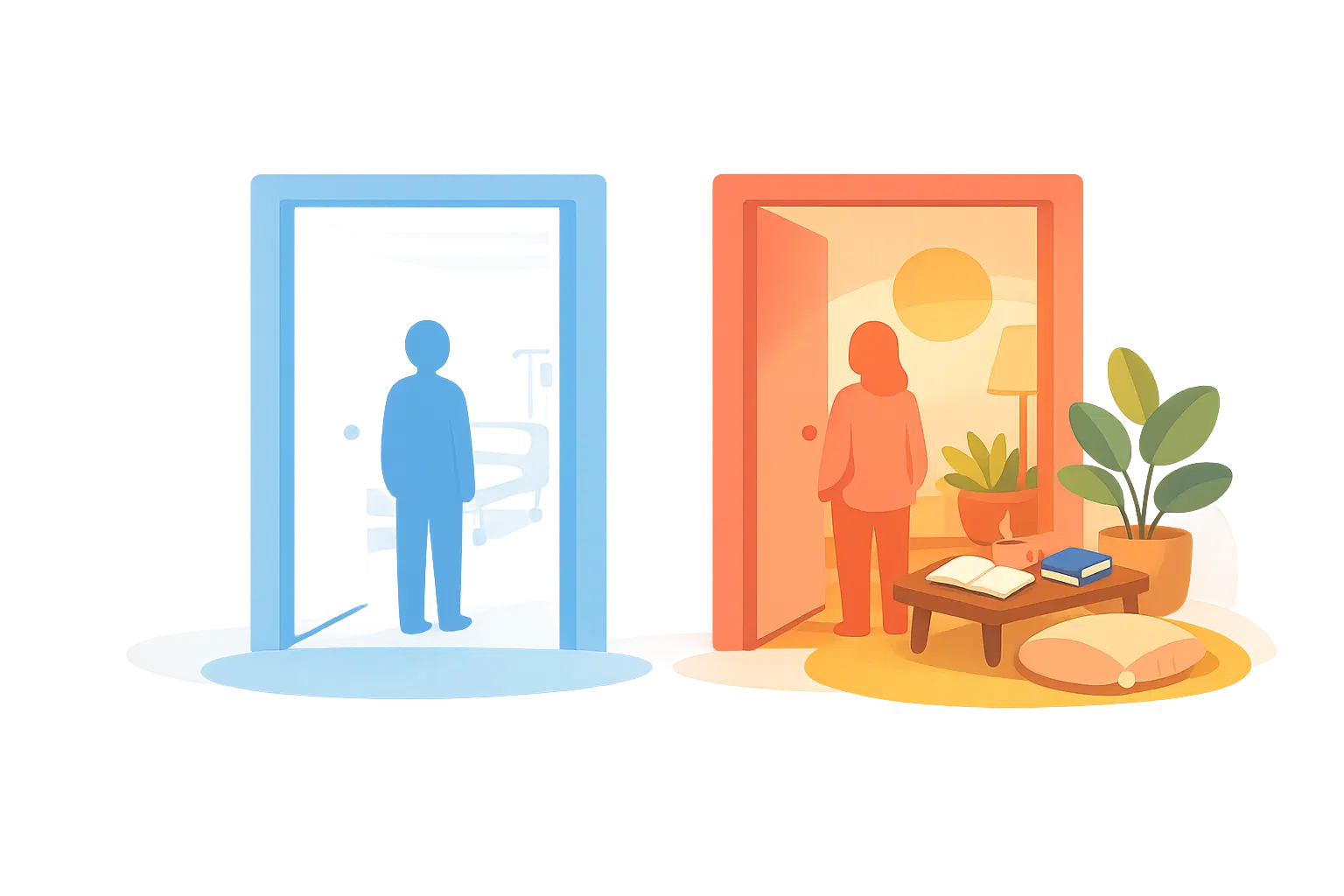
A tool is there when you pick it up. A companion is there when you need it.
Ready to try the difference? Download Onsen. It's free to get started.