How to deal with toxic friendships
The friend who exhausts you isn't always the one who yells.
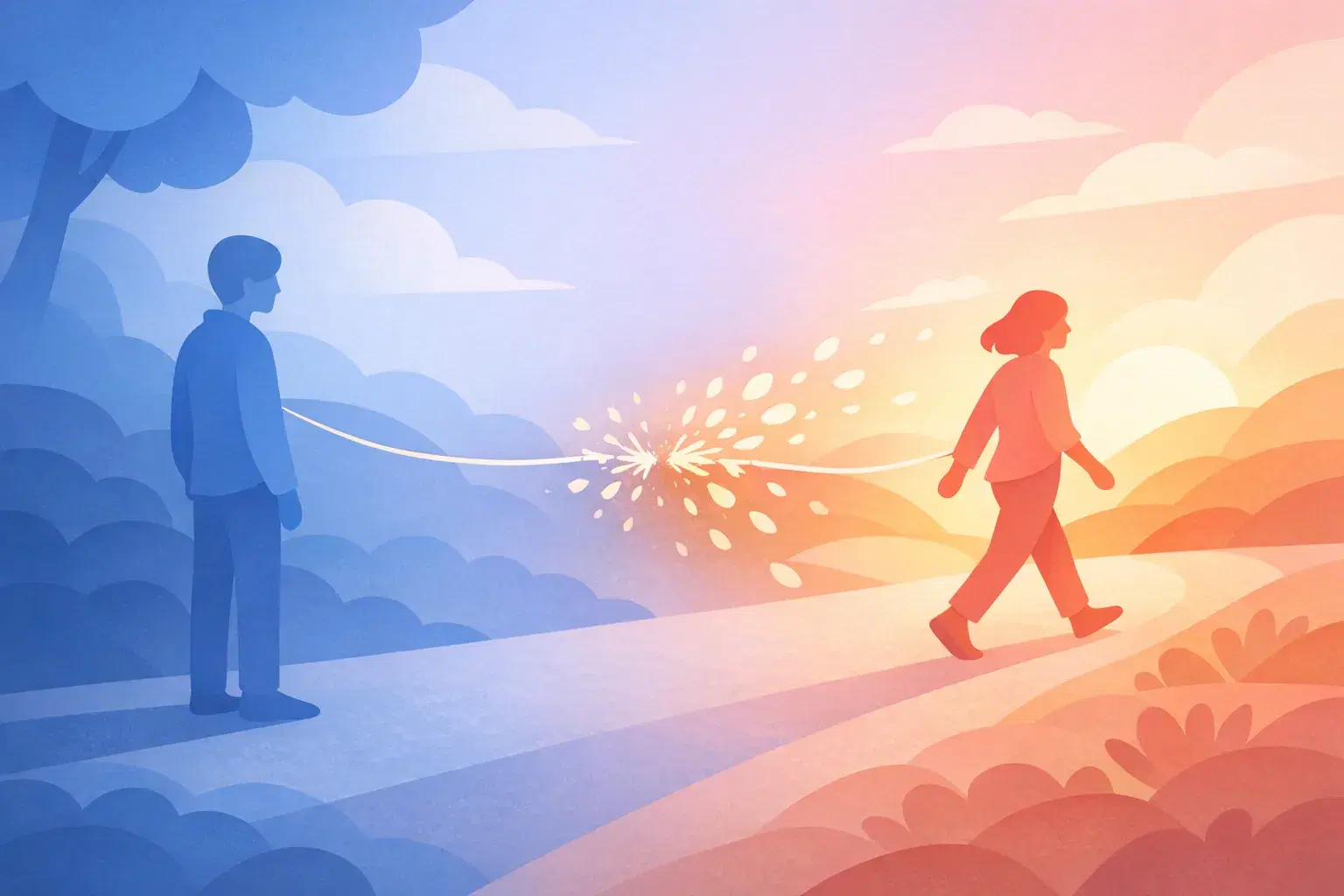
Their name lights up your phone and your shoulders drop. You let it ring out, then feel guilty, then text back an hour later with an apology you didn't owe. You have about eight versions of this friendship. This one used to be your favorite.
Not every toxic friend yells. Some just leave you tired in a way a nap can't fix. This is a guide for the quiet kind: the friend you can't quite defend and can't quite leave.
Your body knows before you do
Your body notices a bad friend before your mind does. When you see their name on your phone and your chest tightens, that's not you being dramatic. Research on anticipatory stress finds that just expecting a stressful social interaction is enough to spike your stress hormones[1]. You don't have to wait for the call to get stressed. The buzz is enough.
The research has a clean name for what you're feeling. Psychologists call them aversive ties or ambivalent relationships[2]. They're the friends who are sometimes warm and sometimes cold, sometimes generous and sometimes cutting. Most adults have at least one. They're surprisingly common and they cost you more than you think.
Here's the part that surprises people. A friendship that's consistently bad is actually less damaging than a friendship that bounces between good and bad. In one study, people had higher blood pressure reactivity and weaker physiological recovery around ambivalent friends than around friends they simply didn't like[3]. The unpredictability is what wears you out. Your nervous system can never fully relax because it never knows which version of them is about to walk in.
And negative interactions punch above their weight. Across decades of research, bad social moments have a stronger, more consistent effect on wellbeing than good ones[4]. One sharp comment from a close friend can overshadow a dozen warm ones. This isn't oversensitivity — it's how human attention works.


The loop is the whole point. Each of the three findings above is one link in it, and that's why the tiredness feels cumulative rather than tied to any specific fight. The exhaustion is the compound interest on a stress cycle your nervous system keeps starting earlier.
Four patterns that tend to repeat
Toxicity isn't usually one event. It's a pattern that repeats across months or years. Naming the pattern is the first real move, because once you can name it, you can stop arguing with yourself about whether it's "really that bad."
Researchers studying adult relational aggression (the grown-up version of the stuff we used to call mean-girl or mean-guy behavior) have named the tactics that quietly damage close relationships: gossip, social exclusion, the silent treatment, and triangulation[5]. Men and women do all of this at roughly equal rates in adulthood[6]. Here's how four of the most common patterns tend to show up in everyday friendships.
| Pattern | What it feels like | What you usually do | What it costs |
|---|---|---|---|
| The taker | Every call becomes their problem. You leave exhausted; they leave lighter. Your stuff barely comes up. | Keep listening. Tell yourself they "need you right now." | Slow emotional burnout. You start avoiding the phone. |
| The one-upper | Your good news gets a flat response, or a rushed pivot to their own win. Your bad news gets a little too much attention. | Stop sharing the good things. Curate. | You feel smaller around them, even on good days. |
| The hot-and-cold friend | Warm and close one week, icy and distant the next. You replay the last conversation trying to find what you did. | Over-apologize. Keep the peace. | Constant low-grade anxiety. You walk on eggshells. |
| The gaslighter | You bring up something that hurt. Ten minutes later you're somehow apologizing. Your memory of events starts to feel shaky. | Doubt yourself. Stop bringing things up. | Your sense of reality erodes. You trust yourself less. |
Most toxic friendships aren't pure examples of one. They mix. The taker who goes cold for two weeks after your promotion is a taker plus a one-upper plus hot-and-cold. Same problem, more faces.
Why it's so hard to leave
If the pattern is this clear, why do we stay? The human mind wasn't built for clean exits. It was built for loyalty, and the loyalty machinery doesn't care whether the person is good for you. Four things work against you at once.
| Why you stay | What it is |
|---|---|
| Intermittent warmth | Casino-style reward. A friend who's wonderful 40% of the time is harder to leave than one who's reliably mean. |
| Sunk cost | The more years invested, the harder it feels to walk — even once the returns went negative. |
| Loneliness as fuel | The fear of being alone overrides the recognition of being hurt. |
| Mutual-friend trap | Ending one friendship in a wider network can feel like ending five. |
Intermittent warmth. A friend who is reliably mean is easier to leave than one who is mean 60% of the time and wonderful 40%. Behavior rewarded unpredictably is much harder to unlearn than behavior rewarded every time[7]. Casinos know this. So does your brain around your most confusing friend.
Sunk cost. Years of memories, a shared history, the 14-year-old version of yourself who loved them first. The more you've invested, the harder it feels to walk away, even when the returns went negative a long time ago[8].
Loneliness as fuel. When you feel like this friend is all you have, the fear of being alone overrides the recognition that they're hurting you[9]. A bad friend can feel safer than no friend. If this is where you are, our guide to the loneliness epidemic is worth a read. The research on who gets lonely and why is more generous than the scold in your head.
The mutual-friend trap. If you ended things, who would you still see at the birthday? Friendships embedded in a wider social network have real structural costs to exit[10]. Ending one friendship can feel like ending five.
The loop looks like this.


The cycle isn't a sign you're weak. It's a sign the friendship has trained your nervous system well. Loops like this break at the minimizing step, where you talk yourself out of what you just felt. Naming what hurts, to yourself first, is how you stop reflexively shrinking the feeling. Even three days of writing about a relationship has been shown to change how people engage with it afterward[11]. If the "I'm being too much" voice shows up mid-spiral, our guide to challenging negative self-talk has scripts for it.
The three-question repair test
Before you walk away, most friendships deserve one honest attempt at repair. Not because you owe them one, but because you'll feel better about leaving if you know you tried.
The test has three questions. All three need to pass.
Yes to all three means you probably have a friend who's going through something, not a toxic friend. Those friendships are worth the work.
Yes to one or two, but not all three, is also useful. Some friendships can handle honesty but not change; some will change the small things but not the big ones. Now you know what kind of friend you have, and you can decide what to invest accordingly.
Step back before you leave
Most people think the choice is stay or end it. Researchers who studied how adults actually end friendships found three strategies, not two[12]. Most people don't nuke a friendship. They shrink it.
| Strategy | What it looks like | When to use it |
|---|---|---|
| Compartmentalizing | Keep them in your life with less access — shallower topics, fewer 11pm calls, more acquaintance-level warmth. | Long history, the history still matters, but they're not close-friend material anymore. Most long friendships end up here. |
| Distancing | Fewer texts back. Longer gaps. Declining plans without a big conversation. The slow fade. | You don't need a formal goodbye. Not every friendship deserves the closure of one. |
| Ending | A clean break, sometimes with a conversation, sometimes not. No further contact. | Behavior is repeatedly harmful, repair has been tried and failed, or safety is at risk. |
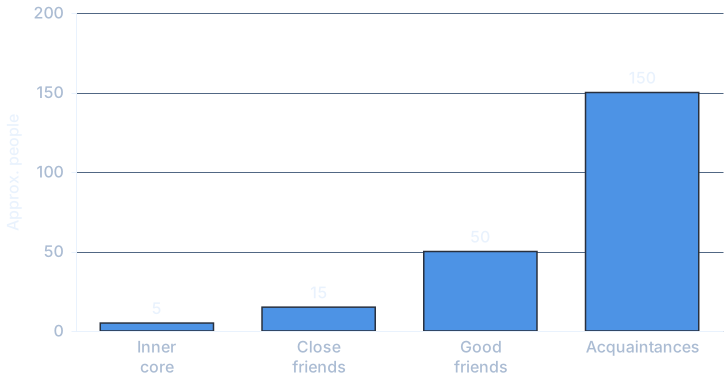
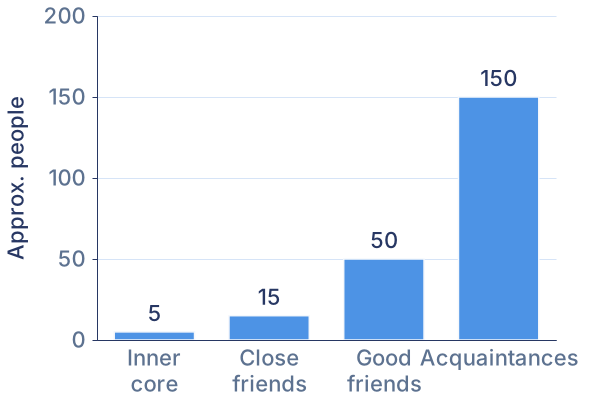
This matches how human friendships are structured in the first place. We don't give everyone equal access. Research on friendship networks suggests our social world is arranged in concentric rings: a very small inner core of about five people, then wider rings of roughly 15 close friends, 50 good friends, and 150 acquaintances[13]. The rings aren't rankings. They're protective. You can't be fully vulnerable with 150 people. Your nervous system wouldn't survive it.
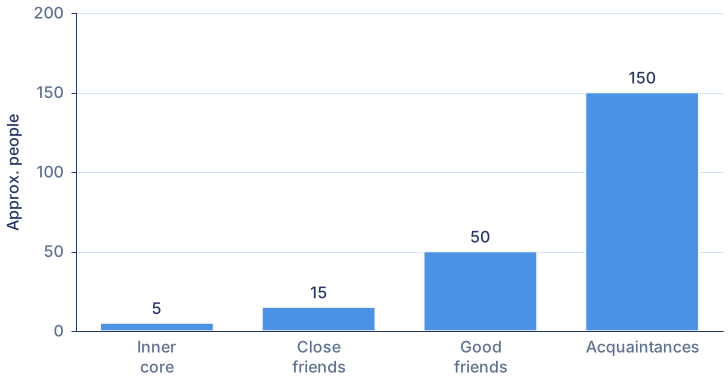
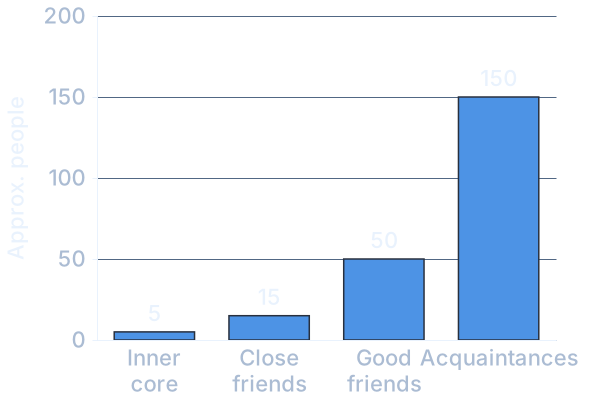
Moving a friend from an inner ring to an outer ring is not the same as ending the friendship. It's a downgrade in how much access they have to you: less vulnerability, fewer 11pm calls, fewer deep updates, more acquaintance-level warmth. For a lot of long histories, this is the honest move. You don't stop caring about them. You stop being wrecked by them.
If you've tried the repair test and the behavior hasn't moved, the slow fade is a legitimate path[14]. Fewer texts back. Longer gaps. Declining plans without the big conversation. Not everyone in your life deserves a formal goodbye.
And if you do end a friendship outright, expect a strange emotional cocktail. In one study of friendship breakups, people reported sadness and relief at the same time, both, not either[15]. You'll miss them and feel lighter, sometimes in the same afternoon. That's not confusion. That's honesty.
Give it a few weeks. Grief compresses. The relief usually stays.
How Onsen can help
The hardest part of a toxic friendship usually isn't the big decision. It's the hundred small ones that make the big one possible: whether the text you're about to send is fair, whether you're overreacting, whether this week's flare-up is a one-off or the pattern. You can't see a pattern from inside one interaction.
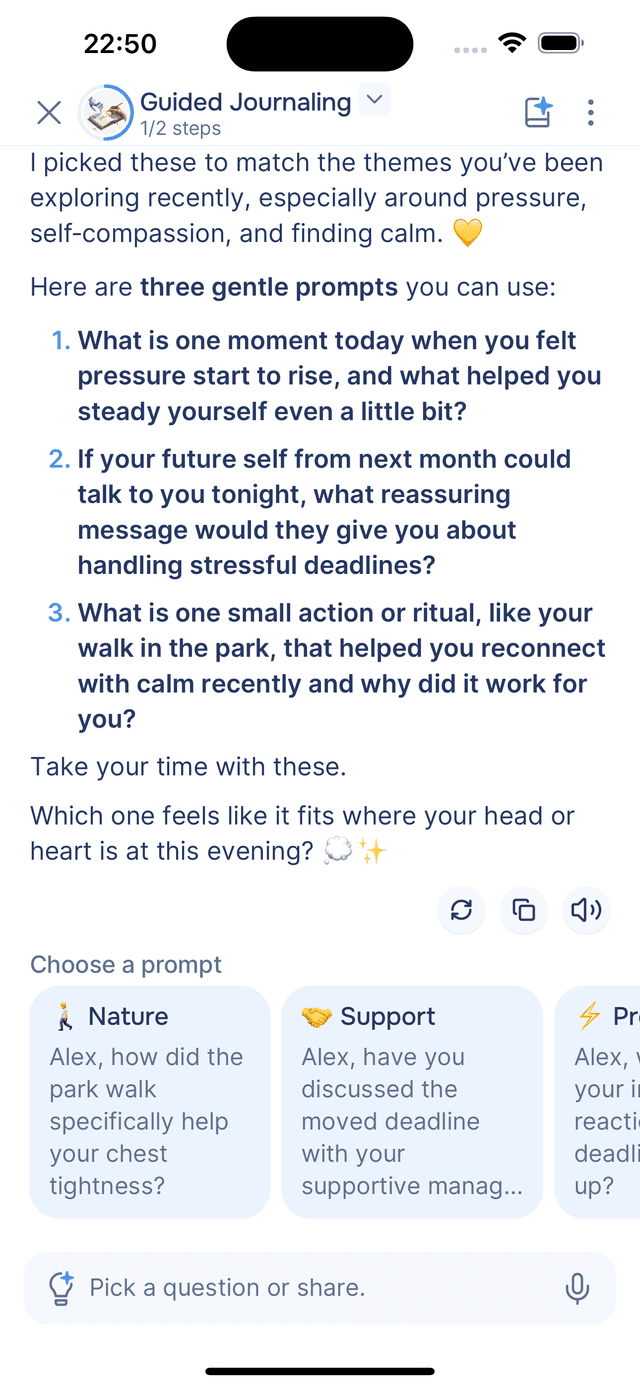
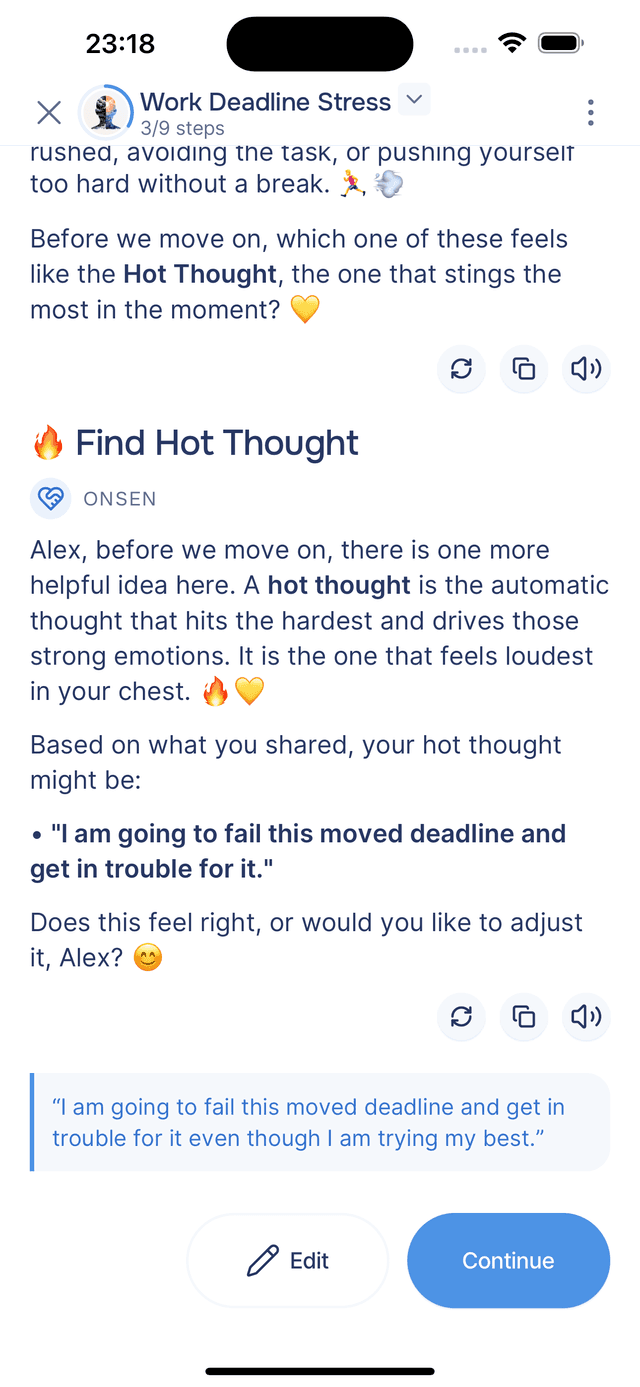
Onsen's guided journaling asks what happened, how it landed in your body, and what you'd do if this were someone else's friendship. By the third entry, the pattern usually shows itself. For the 11pm spiral after one of their calls, voice chat lets you think out loud. And the CBT exercises handle the "I'm being dramatic" voice that a toxic friend almost always leaves behind.
If you're also working on the other side of this, rebuilding the rest of your bench, our guides to making friends as an adult, loneliness in your 20s, and living alone and mental health are the companion pieces. Download Onsen for free.
Whatever you decide, one thing worth carrying: a real friend should feel like somewhere your nervous system can rest. If yours has been running a fever around this person for a long time, you already have your answer.
Sources
- 1.Gaab et al. (2005). “Psychological determinants of the cortisol stress response: the role of anticipatory cognitive appraisal.” [PubMed ]
- 2.Rook (2015). “Social networks in later life: weighing positive and negative effects on health and well-being.” [PubMed ]
- 3.Holt-Lunstad et al. (2007). “The impact of ambivalence in friendships on cardiovascular functioning.” [PubMed ]
- 4.
- 5.Archer & Coyne (2005). “An integrated review of indirect, relational, and social aggression.” [PubMed ]
- 6.Murray-Close et al. (2010). “Proactive, reactive, and romantic relational aggression in adulthood.” [PMC ]
- 7.
- 8.
- 9.
- 10.
- 11.Slatcher & Pennebaker (2006). “How do I love thee? Let me count the words: the social effects of expressive writing.” [PubMed ]
- 12.Khullar et al. (2021). “Relationship dissolution in the friendships of emerging adults: how, when, and why?.” [PubMed ]
- 13.
- 14.
- 15.